
Seminar: Steps toward Dialectical Logic [Fall 2025]
Announcement of our Fall 2025 seminar, “What Kind of Certainty?: Steps Toward Dialectical Logic”—have we overlooked an important Aristotelian text and tradition in our understanding of reasoning? Description Details All Lyceum Institute seminars include weekly readings, lectures, and live discussion sessions. The discussion sessions are recorded. This seminar includes extensive readings, but does not require […]

Seminar: The Opportunities of Technology [Fall 2025]
Announcement of our Fall 2025 seminar, “The Opportunities of Technology”—how can we redeem the technological from its current abused status? Description Details All Lyceum Institute seminars include weekly readings, lectures, and live discussion sessions. The discussion sessions are recorded. This seminar includes extensive readings, but does not require advanced philosophical knowledge (nor does it have […]
On Christianity and the Interpretation of Philosophy
A Philosophical Happy Hour on the influences of Christian belief on philosophical interpretation, and of philosophical wisdom on the practice of the Christian faith. Is there such a thing as “Christian philosophy”? Today, thinking of antiquity draws new interest. The texts of Plato and Aristotle, Plotinus and Porphyry—even the fragments of Parmenides and Heraclitus, the […]

The Death and Evolution of Education – Part IV: Evolution of Higher Education
This is the fourth in a four-part series on the Death and Evolution of Education, which seeks to explain why we cannot rely upon the university to provide the intellectual formation necessary for the common good, but must “evolve” a new approach to learning. Part I: Introduction can be found here, Part II: The Hostile […]

New Faculty Fellow: Herbert Hartmann
The Lyceum Institute is delighted to welcome a third new Faculty Fellow for 2025-26, Dr. Herbert Hartmann. I received my M. A. and Ph.D. in philosophy from the University of Toronto, where I studied under such distinguished Thomistic scholars as Fathers Joseph Owens, Armand Maurer and James Weisheipl, and, as well, Anton C. Pegis, under […]
The Death and Evolution of Education – Part III: Maladapted Universities
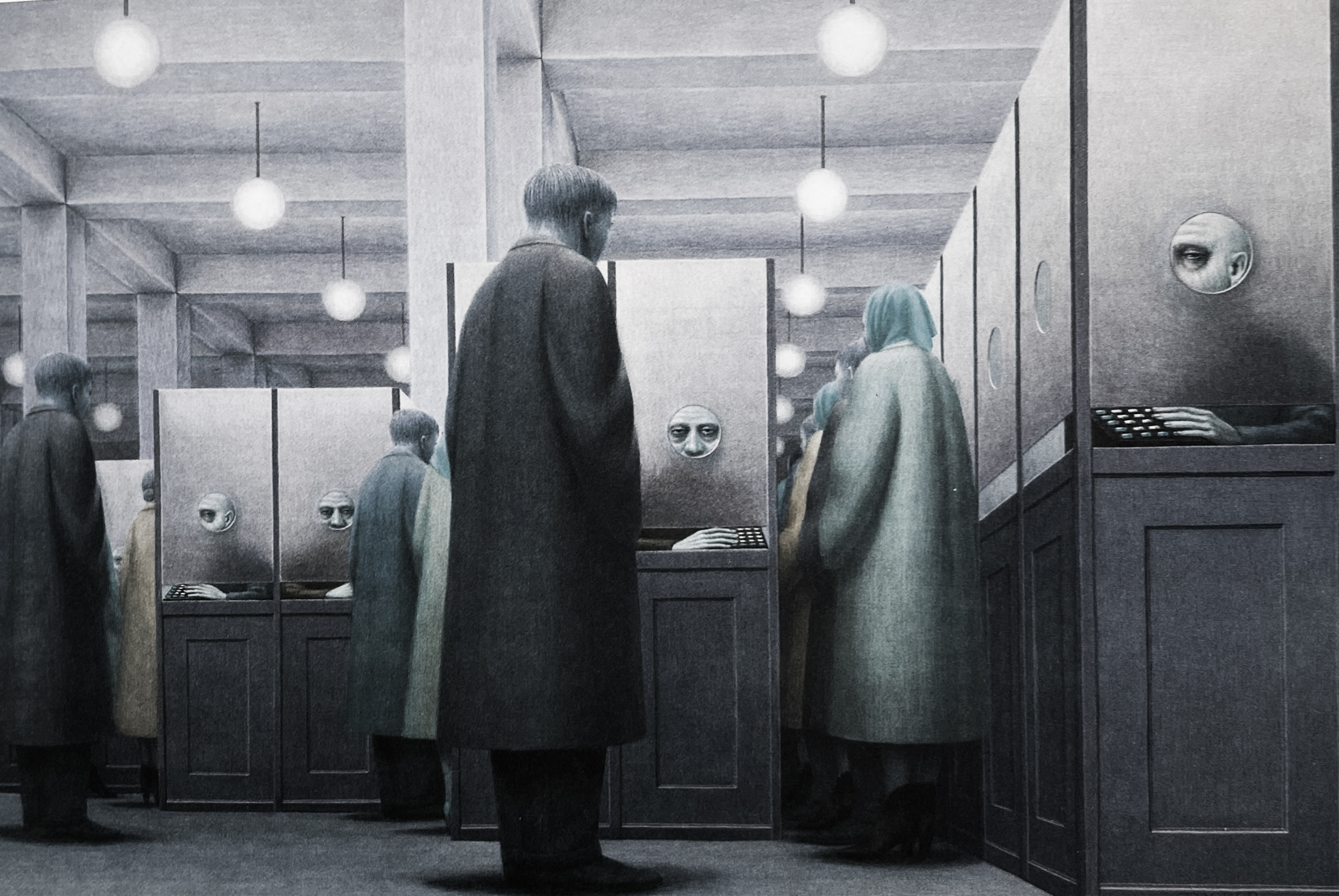
This is the third in a four-part series on the Death and Evolution of Education, which seeks to explain why we cannot rely upon the university to provide the intellectual formation necessary for the common good, but must “evolve” a new approach to learning. Part I: Introduction can be found here, and Part II: The […]

The Death and Evolution of Education – Part II: The Hostile Environment
This is the second in a four-part series on the Death and Evolution of Education, which seeks to explain why we cannot rely upon the university to provide the intellectual formation necessary for the common good, but must “evolve” a new approach to learning. Part I: Introduction can be found here. In this, Part II: […]
Subsidiarity: Worth More than Money
There are certain goods for a human being which cannot be bought, and that we destroy when we try to purchase them: goods such as love, friendship, justice—and indeed, education. What happens when we turn these into products?

The Death and Evolution of Education – Part I: Introduction
This is the first in a four-part series on the Death and Evolution of Education, which seeks to explain why we cannot rely upon the university to provide the intellectual formation necessary for the common good, but must “evolve” a new approach to learning. One part will be published each week for the next four […]
John Poinsot – Cursus Philosophicus
Cursus PHILOSOPHICUS John Poinsot, O.P., also known as Joannes a Sancto Thoma (1589–1644) wrote two major works in his lifetime: the Cursus Theologicus, on which incomplete text he worked from 1635 until 1643, when he was requested to become counselor and Royal Confessor to King Philip IV of Spain. While attending to this new duty, […]
