
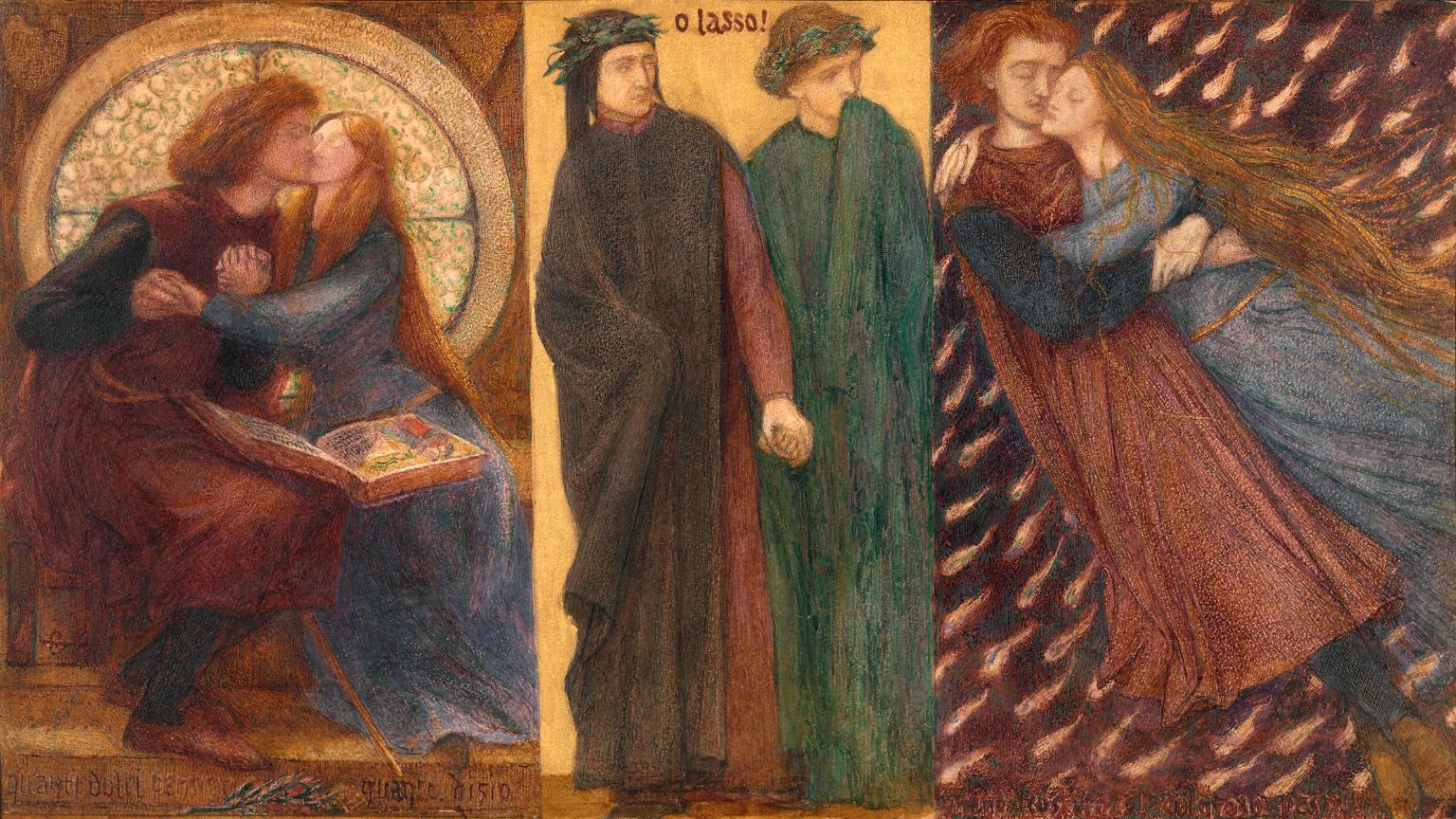
A Philosophical Happy Hour discussing the metaphysical difficulty of unity—in the concrete relations of love and knowledge.
Politicians often use the word “unity”. We must be united. Stand united. Present a unified front. But it takes little investigation to discover that our States—to say nothing of our world—are rather disunited. This fragmentation occurs, moreover, at the level where local community ought to be found. Neighbors hardly know one another; congregants in a church are often nigh-anonymous. Tragedy seems the only thing that brings us together, and not for very long.
This lack of unity raises a few questions. For many of us, it probably seems the default condition. We have grown up in a disunited world, in what are communities only in name and not in fact. But should this really be the ordinary status of our social relations? Before we can ask that question, however, another one should be considered.
Metaphysics of Unity
What is unity? Few concepts are as familiar to us as “one”. But we take familiar concepts for granted and do not question what they signify, nor how. The moment we try to explain what “one” is, what it means, we find difficulties. Is the book in my hands one thing, or many? It contains many pages, many words, signifies many ideas. Am I myself something one, or many? I have many parts, not only physical but psychological. Some of these parts seem even to conflict with one another, as when I want mutually exclusive things, or when my desires and my knowledge seem in opposition.
Thus, even though we seem by our own individual identities to be “one”, we find that unity—paradoxically, it seems—contains a multiplicity or plurality. And what, for that matter, is “identity”? One might easily slip from these confusions into thinking that “unity” is never anything but a fabrication of the mind. In other words, the book is not really “one thing” in itself, but “one” only because I conceive it as one. So too the house in which I live, so too the neighbor across the street, so too even my very self. Each is a many—we might think—upon which we impose an identity.
Knowledge and Love
But if we take this as true, what then would follow for our relationships to the rest of the world? If every unity is but a fabrication of the mind, then every relation is merely a mental fiction. I would not know the tree outside any more than I know you, or you could know me. Love would be nothing but a feeling; and the beloved only ever an imagined projection.
But Aristotle says that the soul, in some way, is all things, through knowledge. A whole tradition of thought follows him: we, in knowing, become the known. This “becoming” consists not in accumulating images or representations, but in really being related. We attain a union with the known—and so too, a union with the beloved (an union better expressed by the poet than the philosopher).
Join our community in conversation this Wednesday (6 May 2026, from 5:45-7:15+ pm ET) as we think through the nature of unity and multiplicity, of internal and external union, and ask these and related questions:
- What makes something to be one? How do we understand that something as something one, something united?
- Is unity more perfect than multiplicity? Why?
- How does knowledge produce unity between the knower and the known? What kind of unity is this?
- How does love affect unity between lover and beloved? How does this occur when the relation is asymmetrical? What are the effects of love’s union?
philosophical happy hour
« »
Come join us for drinks (adult or otherwise) and a meaningful conversation. Open to the public! Held every Wednesday from 5:45–7:15pm ET.
mailing list join live
Leave a Reply