
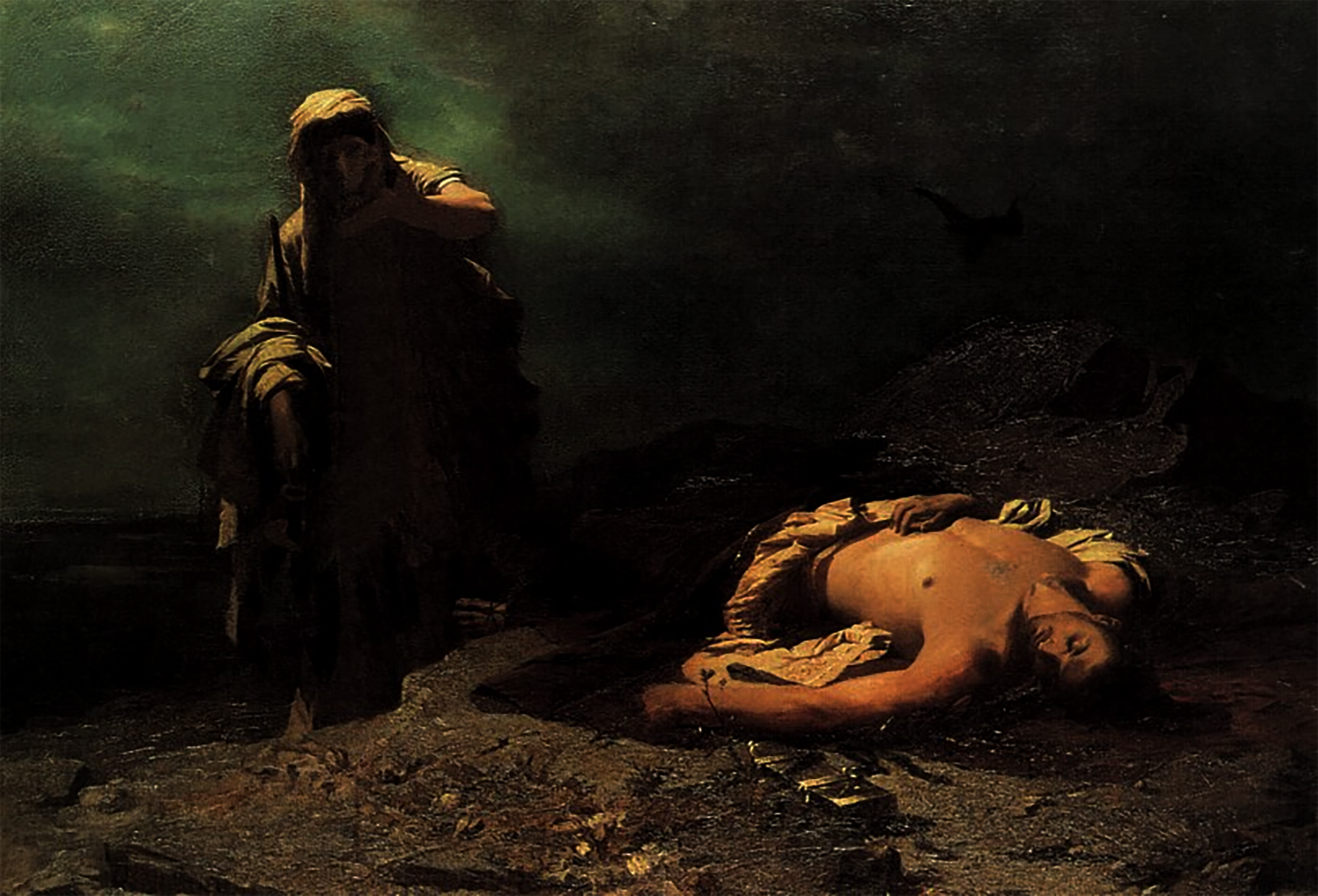
A Philosophical Happy Hour discussing fate, providence, and the limits of human free choice.
What determines the course of a human life?
Some might answer this question by appealing to choice: you are what you choose to be. Others might blame circumstances: being born into wealth or poverty of money or genes, suffering youthful traumas, or large historical events—a kind of materialist determinism. Still others want to ascribe their lives’ shape to an unseen demiurge: an invisible force against which no human being has a hope. One does not choose success or failure, salvation or damnation, but is ordered to it from before he was born.
These answers each obscure the difficulty of the question. We all feel that choice plays a role in our lives, for we all make choices—and try to make good ones. But there are many things we cannot choose. And this inability to choose everything, including those apparent material variables of fortune which seem to make so large a difference in our lives, seemingly always gives weight to the idea of “fate” or “destiny”.
Fate in Tragedy and Philosophy
Greek tragedy gives a powerful dramatic expression to this predicament. In Sophocles’ Oedipus plays, a man seeks to avoid what has been foretold, only to discover that his very efforts have helped bring it about. The horror of tragedy does not lie merely in suffering, but in the revelation that his intelligence, courage, and even his pursuit of what seems truly just may be snared by a design beyond his ability to perceive. Fate thus appears as something inescapable: a pattern that traps us no matter what we choose.
Indeed, the histories of the ancient world—such as those of Herodotus or Plutarch—seem often to tell of men whose seemingly free actions only pulled tighter around themselves the web of destiny.
But Greek philosophy gives us a contrary perspective. In Aristotle, that is, we find an account of “fortune” which sees it as a particular kind of chance event—an intersecting of causal lines not ordinarily related to one another—which somehow affects a human’s intentional action. Thus, although chance is not natural, it seems nevertheless to be explained by natural causes.
Fate from the Perspective of Faith
With the advent of Christianity—as the fulfillment of Judaism—the question of “fate” undergoes a shift: for there we find the concept of providence. Divine governance in a providential order does not mean that human action is illusory, nor that worldly success reveals divine favoritism, nor that suffering marks abandonment (perhaps sometimes to the contrary). To collapse providence into a hidden determinism misleads as to God’s providential gift.
But this has happened many times: in ancient Gnostic schemes, in modern ideologies of historical necessity, in spiritualized claims of election by status or bloodline, and perhaps in certain tendencies within modern religious determinisms. In each case, the ability to escape is claimed by a secret order known only to the initiated… or conveniently identified with the good fortunes of the powerful.
Fate and Choice in the Modern World
Our imaginations today tend to oscillate between two reductions. On one side stands scientific determinism, which explains the person as an outcome of impersonal mechanisms. On the other stands a spiritual determinism, which seeks meaning in an invisible order. Accepting either one can superficially relieve us of the burden of freedom.
But perhaps the right question is not whether we are wholly determined or wholly free. Perhaps it is whether, within the givenness of our lives—all the unchosen limitations and the undeserved gifts—we can still act well. Fate, fortune, and providence name different ways in which life exceeds our control. But “choice” names the act by which, within those unchosen threads, we remain human.
Choosing to Question
Should you choose, you may join us in lively conversation this Wednesday (24 June 2026, from 5:45-7:15+ pm ET) as we elect to think about these and related questions:
- What do we ordinarily mean when we say that something was “fated” or “destined” to happen? Do we mean that it was inevitable, intelligible only in retrospect, or simply beyond our control?
- In Greek tragedy or history, especially in the Oedipus plays, do the characters suffer because of fate, because of their choices, or because the two are inseparably entangled?
- What changes when the question of fate is viewed through the Christian idea of providence? What must providence affirm that fatalism or determinism denies?
- What is the difference between accepting the givenness of one’s life and resigning oneself fatalistically to it?
- Is the highest exercise of freedom found in controlling outcomes, or in acting well within circumstances one cannot control?
philosophical happy hour
« »
Come join us for drinks (adult or otherwise) and a meaningful conversation. Open to the public! Held every Wednesday from 5:45–7:15pm ET.
mailing list join live
Leave a Reply