
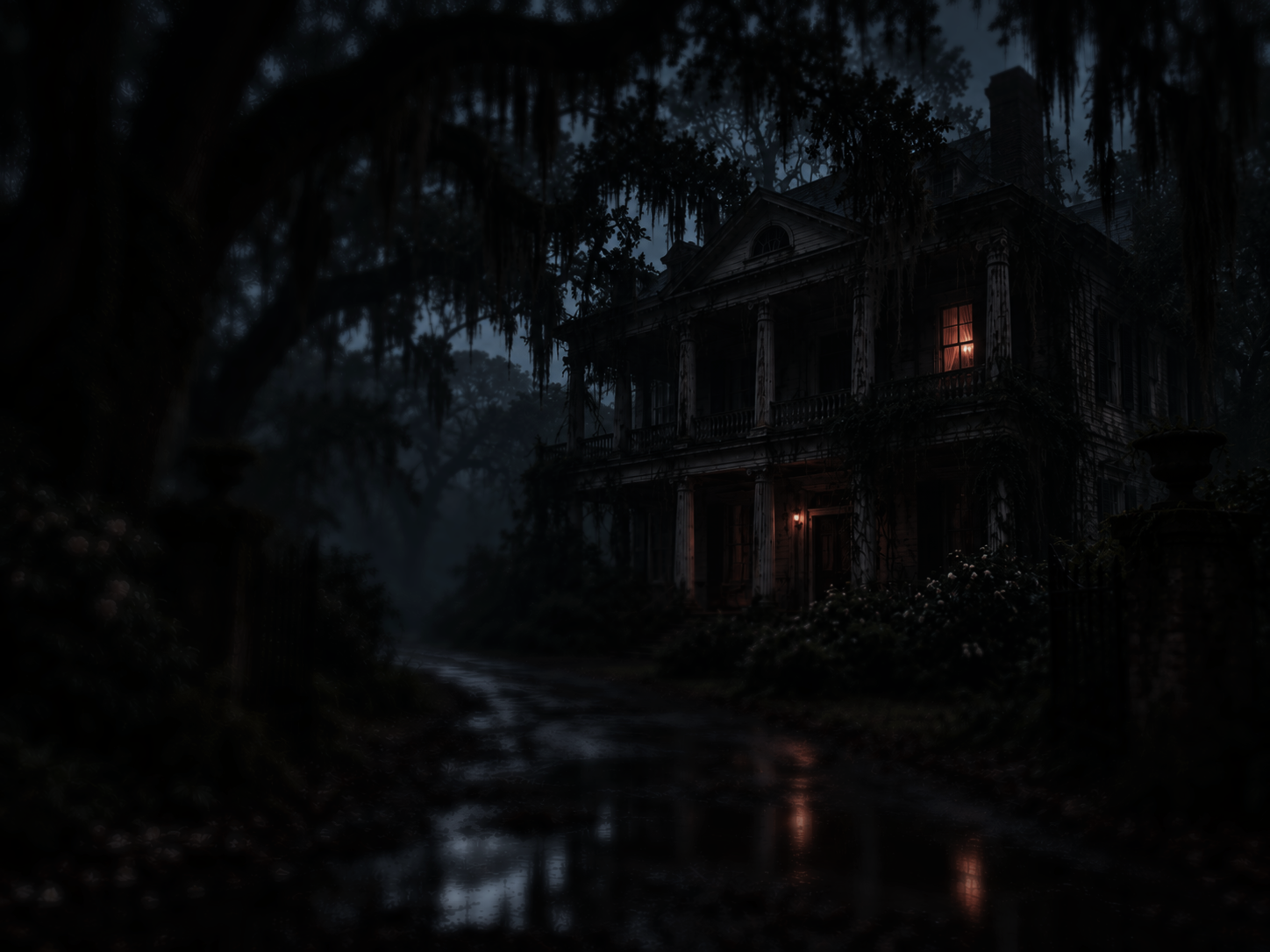
What drives an audience—be it of a movie or book—to subject itself to the emotions of fear and horror? What are these emotions? Do they play a role in forming the moral imagination? Our Philosophical Happy Hour gets spooky.
I will confess—I have never myself been much a fan of horror movies. On the one hand, most I find uninspired and silly, over the top; and thus, not really frightening in any sense—apart perhaps from the jump-scare, or the disturbing sounds and imagery. On the other hand, I believe there is something important in recognize the perhaps needed role of these negative feelings in our moral imagination. They discomfit us. Works of imagination ought to do just that, from time to time.
Let us think through why.
What are Fear and Horror?
As often, Aristotle helps us with definitions. In particular, his definition of fear (Rhetoric, II.5) is: “a certain pain and perturbation arising from an imagining of an impending ill that is destructive or painful.” Thus, a frightening thing is that which appears “to have a great capacity to bring about destruction or such harm as tends to issue in great pain.” I might feel fear, thus, when I hear a riot is approaching my house, or a tornado. One morning, I woke up to a loud bang and rumble about 5 am and feared an explosion, perhaps a bomb (it was, in fact, an earthquake).
But so too, we might fear something purely imagined, without sufficient reason to believe it impending. It is precisely this purely imagined fear constituted out of our movies and books. We might watch a movie and not believe in the monster… but that corner of the basement sure is dark… and what is that noise?!
Much modern fictitious media, however, aims at something beyond mere fear: namely, horror. The concept of horror adds to fear a certain aversion or repugnance at the object. An ordinary murderer (if we could identify such a thing) has a motive, a reason why; he might cause us fear, but not horror. The serial killer, the one who kills for some pleasure derived from the act itself: the perverse reasoning behind this is foreign to us (or should be). So too the supernatural. We stand stupefied before it; not only perturbed by the impending ill but frozen by its incomprehensibility.
Horror—or the Grotesque?
There is ordinarily, that is, something unreal in the horrific. It is the positioning of this unreality that makes it horrifying; a kind of incoherence between that which threatens and all the rest around it. This is why stories in which everything is horrifying are not very successful horror. Classical gothic horror, for instance, succeeded by the monster being something that violated the moral or natural order. An author like H.P. Lovecraft succeeded, on the contrary, by suggesting that the orders of life we observe are mere smokescreens obscuring a deeper, incomprehensible reality throughout the cosmos; but the order of life still had to be presumed in order for that revelation to shock and frighten.
This brings me to a contrast: namely, between horror and the grotesque. Here I would draw upon a lecture once given by Flanner O’Connor. As she describes:
In these grotesque works, we find that the writer has made alive some experience which we are not accustomed to observe every day, or which the ordinary man may never experience in his ordinary life. We find that connections which we would expect in the customary kind of realism have been ignored, that there are strange skips and gaps which anyone trying to describe manners and customs would certainly not have left. Yet the characters have an inner coherence, if not always a coherence to their social framework. Their fictional qualities lean away from typical social patterns, toward mystery and the unexpected.
On the surface, this may not seem very different from horror. But as O’Connor goes on to state, the weirdness or “fanaticism” of the grotesque character is “not merely an eccentricity” but a “reproach”. What, I must ask, might she mean by this?
Perhaps, if I might suggest, it is a reproach to the reader for his ordinary way of thinking. A reproach, that is, for having allowed our sense of evil to become “diluted or lacking altogether”.
Shaping our Moral Imaginations
Join our Philosophical Happy Hour this Wednesday (28 October 2026, from 5:45-7:15+ pm ET) as we think through the goods, the ills (impending and purely imagined), and the oddities of fear, horror, and grotesquery on shaping the moral imagination of the human person. One will profit from reading the brief (8 page) lecture by O’Connor. Further, let us keep this questions in mind to shape our thinking:
- How do horror and the grotesque shape our moral imagination?
- Why do we willingly subject ourselves to fear and horror through works of fiction? What is pleasurable—even desirable—about experiencing these negative passions?
- What distinguishes something frightening from something horrifying? Is horror merely an intensification of fear, or does it involve a fundamentally different apprehension of evil?
- What makes something monstrous? What does our recognition of monstrosity presuppose about our understanding of things?
- In what sense is the grotesque in fiction a reproach, as O’Connor suggests? How might distorted or bizarre characters and situations reveal truths about human nature that ordinary realism leaves concealed?
Open to the public
Philosophical Happy Hour
Join a meaningful public conversation every Wednesday, 5:45–7:15 p.m. ET.

Leave a Reply