
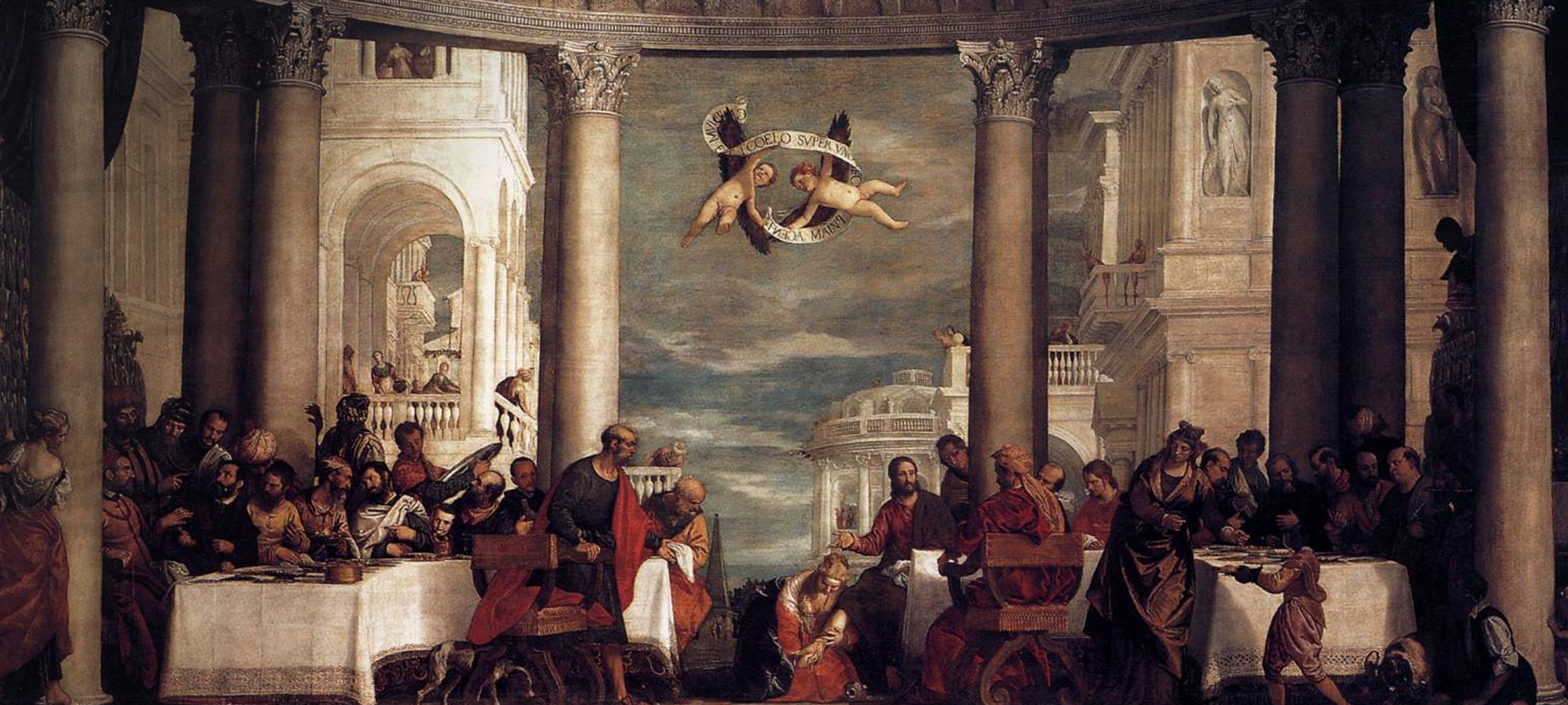
A Philosophical Happy Hour discussing the history, nature, meaning, and importance of dialectic—including its relation to logic, demonstration, and rhetoric.
Old words of long and widespread use often suffer many interpretations: idea, object, concept, form. One word which has suffered greatly is “dialectic”. The word’s Greek etymology indicates “speaking across”, that is, a conversational speaking. But seldom has it been understood as something merely casual. Instead, it has been seen as a means to some kind of resolution. Sometimes, a testing of propositions. Others, a particular art of reasoning from common opinion. The practical art of using formal logic. Adversarial dispute. Sophistry. In some it has even been seen as a phenomenon of reality itself—not one of conversation or expressed linguistic signification.
We see this lattermost sense most prominently, first, in the received thought of George Wilhelm Friedrich Hegel (1770–1831) and later in the materialist transformation given it by Karl Marx (1818–1883). That is, in these later moderns, “dialectic” comes to signify the movement of spirit or history, a process achieved by oscillation between relative extremes.
But in the older tradition of Aristotelianism and Scholasticism—obscured by these late-modern confusions—we find still further confusions about the meaning of “dialectic”. To clarify these, we will together read Aristotle’s Topics, I.1-2, and think through the following points.
The History of Dialectic
This history is, of course, much longer and more involved than we can here discuss. But summarily and broadly, we may divide dialectic, as an important element in the formation and practice of intellectual pursuits, into three periods: the Greek, the Scholastic, and the Late Modern.
As aforementioned, the Late Modern understanding considers dialectic not as a practice of expressed signification but as a force responsible for changing reality. This change begins not with Hegel, but with Immanuel Kant (1724–1804). To be sure, Kant’s “transcendental dialectic” does not function as a force of world-historical reordering. Rather, Kant’s dialectic concerns a theory of “objective laws” for the “subjective understanding”: a process of discovering the contradictions or antinomies by which reason’s operation runs into its limits.
For Kant, the results of dialectic are therefore a negation. For Hegel, the encounter of a contradiction does not constitute the limit of reason but rather its opportunity for advance: the contradictory elements of each position are mutually “cancelled out”, allowing a new truth to develop from the unity which remains. Dialectic is thus a process of constituting a truth not previously realized. It belongs to the mind or spirit, but constitutes a historical advance.
Not long after Hegel, however, Marx extracts dialectic from the mind and places it in the world itself: the opposition of material social relations. It signifies not a conflict of propositions—a logical contradiction—but the conflict of historical forces of production, wealth, and class. Rather than a new truth, the struggle and revolution against prevailing conditions produces a new social order.
Contrariwise, in the Scholastic order (moving backwards through time), dialectic was primarily understood as the art of reasoning from probable or commonly accepted premises toward clearer judgment. This art was ubiquitous, dominant in the culture. Open most Scholastic texts today and you will find yourself confronted with disputationes, disputed questions containing objections, counter objections, a resolution affected by the author, and replies to the specific objections. Nevertheless, despite its ubiquity, this art—always navigating between a multitude of positions because there was no clear and direct route to certainty—was itself at times confusingly conflated among certain Scholastics with that of logic, a more fundamental practice of intellectual discipline.
While it did so in a rather formalized manner, the Scholastic tradition stands largely in continuity with Aristotle. It maintains the distinction from demonstration and rhetoric, recognizing that dialectic is a process that leads towards principles or certainty, and that it helps us navigate the probable. It also recognizes that the art or training in dialectic develops and refines a natural habit in which we all engage. But the degree to which the art developed seems, in some sense (at least in our preserved records) to have partially obscured the natural intellectual activity from which it arose. In Aristotle’s own approach, that is, it seems a rather organic activity of the human being that we should engage in dialectic.
The Importance of Dialectic
Therein, it seems, lies the most fundamental importance of the art. The Scholastic presentation might seem, at times, rather too “artificial”, structured—disconnected from the way in which we ordinarily converse. I suspect that neither you nor I often make statements such as, “I distinguish the minor” or “I accept the major but dispute the illation”. (If you do, you must have a… unique circle of friends.)
Today, it also seems, we have lost an art, practice, or even unpracticed but nevertheless fruitful habit of arriving at communal understanding through conversation concerning disputable matters. An ability to distinguish opinion from demonstration, of the probable—and well-argued—from the merely conjectural serves all of us well. Its absence leads to political and social disorder.
Recovering dialectic may prove very important for us all.
Questions Concerning Dialectic
But before we can recover it, we ought to figure out more precisely: what is dialectic?
Join us in conversation this Wednesday (17 June 2026, from 5:45-7:15+ pm ET) as we read these two short chapters from Aristotle and discuss:
- What is dialectic? Is it principally a standalone art of inquiry, a branch of logic, a mode of engaging in dialogue?
- Why does dialectical inquiry begin from opinions accepted by everyone, the majority, or the wise? Do these degrees of acceptance give them authority?
- Is probable reasoning merely an inferior substitute for demonstration, or is it an indispensable and permanent part of human intellectual life?
- Do people naturally practice a kind of dialectic while failing to distinguish what has been demonstrated from what has only been rendered probable? How does this confusion affect disagreement and the communication of truth?
- What conditions does fruitful dialectic require—mutually accepted definitions, consistent interlocutors, common authorities, time, trust, or intellectual formation? Are digital social networks inherently rhetorical, or could they be structured to support genuine dialectic?
- How should grammar, dialectic, logic, and rhetoric be understood as related to or distinguished from one another?
philosophical happy hour
« »
Come join us for drinks (adult or otherwise) and a meaningful conversation. Open to the public! Held every Wednesday from 5:45–7:15pm ET.
mailing list join live
Leave a Reply