
The Future is Technoclassical: Signs of the McLuhan Century (Part Three)
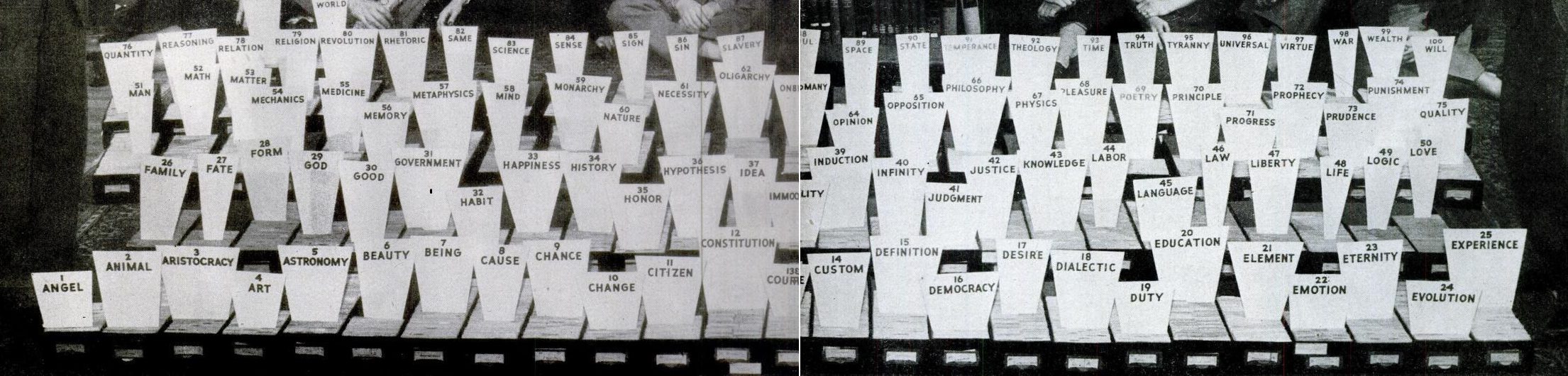
To appreciate how Dewey’s “progressive” educational model and Hutchins’ and Adler’s conservative or “classical” educational model were both inadequate responses to the technological environment of the 20th century – namely, the displacement of the print environment by the electric environment – it will be helpful to make a brief detour into the pioneering media analysis […]

The Future is Technoclassical: Signs of the McLuhan Century (Part Two)
If the difficult and polarizing aphorisms of the media theorist Marshall McLuhan might be appreciated, not as provocative and likely misleading pop cultural soundbites, as they were in the 1960s,1 but rather as foundational insights through which to understand, and act in, the present digital world, how might we begin to formulate the contemporary significance […]
The Future is Technoclassical: Signs of the McLuhan Century (Part One)
It is fairly straightforward (and glum) to observe that our culture’s dependence on, and even reverence for, technological innovation has, in large part, led to the widespread displacement of the humanities by STEM (Science, Technology, Engineering, and Mathematics) in institutions of higher learning. Nevertheless, the perhaps unexpected ways in which our technological culture is implicated […]
