

On the Experience of Evil in Our Souls
A Philosophical Happy Hour on the question: do we (some of us, all of us) need to experience evil—even sin, that experience of our own moral fault—in order to discover and know the good? Drawing upon some of the works of the great tradition, a member asks the question: “to what extent is it important […]

On the Future of Education and Technology
A Philosophical Happy Hour discussing education and technology in light of the first entry in Adam Pugen’s “Future is Technoclassical” article. In a recent article, published here on the Peripatetic Periodical, Faculty Fellow Adam Pugen investigates the resurgence in “classical education” that has been affected through the digital environment. The precise nature of this technologically-mediated […]

On Slicing Through “Conspiracy Theories”
A Philosophical Happy Hour on how we ought to approach conspiracy theories.“The truth is out there”? Human history finds itself interwoven, in every age, with falsehood. We suffer, to steal a phrase of Umberto Eco’s, a “fatal imbalance between story and plot”—between what underlies, the reality, and what sits atop, the narrative. In recent years, […]

On the Thought of Immanuel Kant
A Philosophical Happy Hour on the structure and merits of Immanuel Kant’s key contributions to theories of knowledge and morality. Immanuel Kant’s philosophy remains a turning point in the history of thought, one that has shaped not only modern theories of knowledge—which “epistemology” has wound its way into countless other domains of human activity—but also […]

Spring Seminars [2025 Q2]
Announcing enrollment for our two Spring Seminars: Culture: More than Aesthetics and Thomistic Psychology: The Life of Thought. Culture: More than Aesthetics Thinking of art, we tend to think of the beautiful—and rightly so, for this, in some way, is to what all art aspires: if not directly, then indirectly, inasmuch as even the simple […]

On the Renaissance and Human Dignity
A Philosophical Happy Hour on the notion of human dignity as conveyed through thinkers of the Renaissance. The philosophy of the Renaissance—a somewhat deceptive but now inescapably common name for the movement, occurring roughly (with some notable outliers) between 1350–1650, to retrieve Platonic thinking, emphasize the arts of grammar and rhetoric over that of logic, […]

On Contemporary Atheism
A Philosophical Happy Hour centered around a reading of Jacques Maritain’s essay, “The Meaning of Contemporary Atheism”. Included in a collection of essays under the title, The Range of Reason, we find Jacques Maritain’s, “The Meaning of Contemporary Atheism”. We will gather this Wednesday (2/26/25) to discuss this essay’s primary intention—explaining what it means and […]
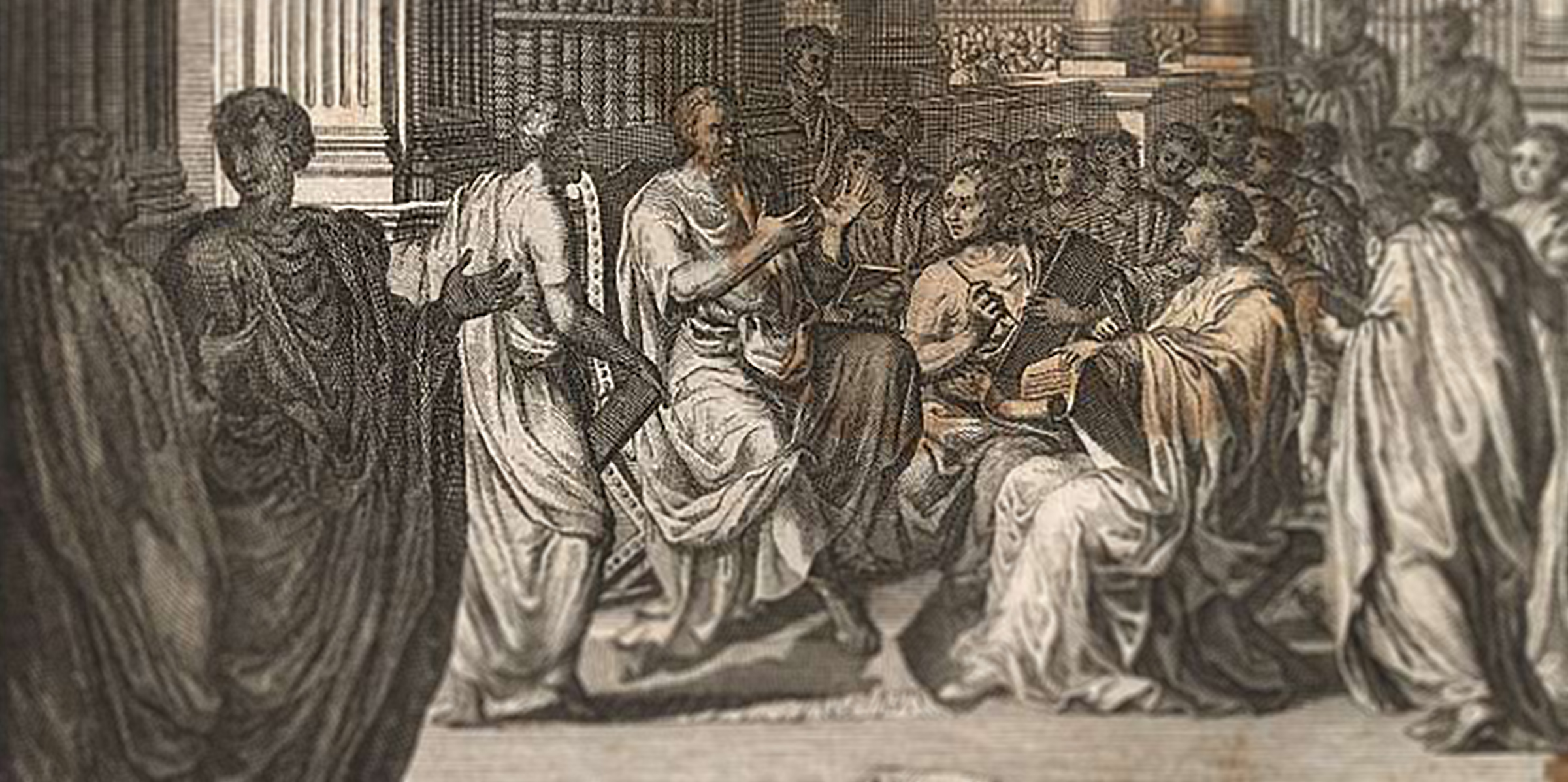
On Habits of Speaking Well
A Philosophical Happy Hour on the use of language to convey thinking: from daily conversation, to professional presentation, let us ask after the habits of speaking well. How does one learn to speak well? Many courses are offered with proposed solutions—from the WikiHow to MasterClasses and entire college majors. Yet it seems, upon brief reflection, […]

On Leadership
A Philosophical Happy Hour on the nature of a leader, the act of leading, and the concept of leadership in society. Entering into this Happy Hour post, I saw two paths before me: the first and more immediately attractive was the literary road—to think of Hector and Achilles, Odysseus, Aeneas, Virgil in Dante or Satan […]

New Faculty Fellow: Adam Pugen
The Lyceum Institute is happy to welcome a new Faculty Fellow for 2025, Dr. Adam Pugen. I have long been interested in the relationship between rational inquiry, existential meaning, and the aesthetic ways in which ordinary and transcendent experience is symbolized by different forms of human culture. Discovering the work of media theorist Marshall McLuhan, […]
