
Discussing Certitude and Intuition
A Lyceum Member writes, proposing a Philosophical Happy Hour topic: What is certitude? What role do signs play in achieving certitude? What role do signs play in intuition? Can I be certain about my mother’s love – is it intuited through signs, or through some other means? The notions of certitude and intuition have played […]

A Philosophical Inquiry into Facts
What is a fact? The English word, used so commonly throughout the modern world, comes from its Latin cognate, factum: an event, occurrence, a deed, an achievement. But since the mid-17th century, under the auspices of the Enlightenment’s so-called “empiricism”, the word has been taken to be a “reality” known as independent of observation. The […]
Whose Tradition? Which Nostalgia?
Our next Philosophical Happy Hour continues our discussion of modernity. We turn to the topics of tradition and nostalgia, with a focus on the potential role of nostalgia in the increasing number of “return to tradition” and “create a new tradition” movements arising within contemporary societies. Though “modernity” is a difficult term to define, it […]

On the Philosophy of Boredom
Who does not dislike the experience of boredom? To be bored is to feel one’s time, one’s energy, one’s capacities are wasted, withering away on nothing. But, at times, the boredom that seizes us disregards even our greatest loves: no matter the diversion attempted, boredom takes sway. We might pick up a favorite book, only […]
Ignorance of History and Moral Weakness
“Those ignorant of history are condemned to repeat it” — an oft-iterated maxim that is both often ignored, and, perhaps, misleads. Some history ought, perhaps, to be repeated. (Originality is seldom all that it is praised for being.) Nevertheless, an ignorance of history does have pernicious consequences. It makes us narrow-minded, arrogant, selfish, and ungrateful. […]

Symbolism at the Nadir of Modernity
Our late-modern world, to borrow a phrase from Carl Trueman’s Rise and Triumph of the Modern Self, dwells in petty enchantments. That is, the rise of modernity, and especially industrial modernity, affected what Max Weber termed a disenchantment: we no longer saw vitality and power in nature and its operations but a mere mechanicism. The […]
Studiousness vs. Curiosity
I begin this inquiry into the contrast of studiousness vs. curiosity by quoting from a perspicacious essay of the literary theorist Allen Tate, penned in 1945, titled, “The New Provincialism”. Tate writes: The provincial attitude is limited in time but not in space. When the regional man, in his ignorance, often an intensive and creative […]
Is Beauty a Transcendental?
Perhaps you have heard of Bryan Johnson, the wealthy man spending millions of dollars per year on a routine designed to reverse his age. This routine requires absolute conformity: every day of his life is controlled by the program titled “Blueprint”, which comprises routine measurement and treatment of: heart, brain, lung, the gastrointestinal tract, his […]
On the Purposes of Art
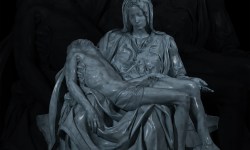
What is the purpose of art? It is not a new question. To the contrary, it resides among the oldest of questions. Some may despair of a meaningful answer, given the ancient age of a question yet still be asked—and, at times, asked as though nothing said in the millennia before us has given satisfaction. […]
What does it mean to know?
“I know.” “I don’t know.” We say these two sentences all the time. But do we know what they mean? Do we know what it means, “to know”? For many persons, content as they are not to ask meaningful questions, there seems no need of an answer. But for anyone who wishes to have confidence […]
