
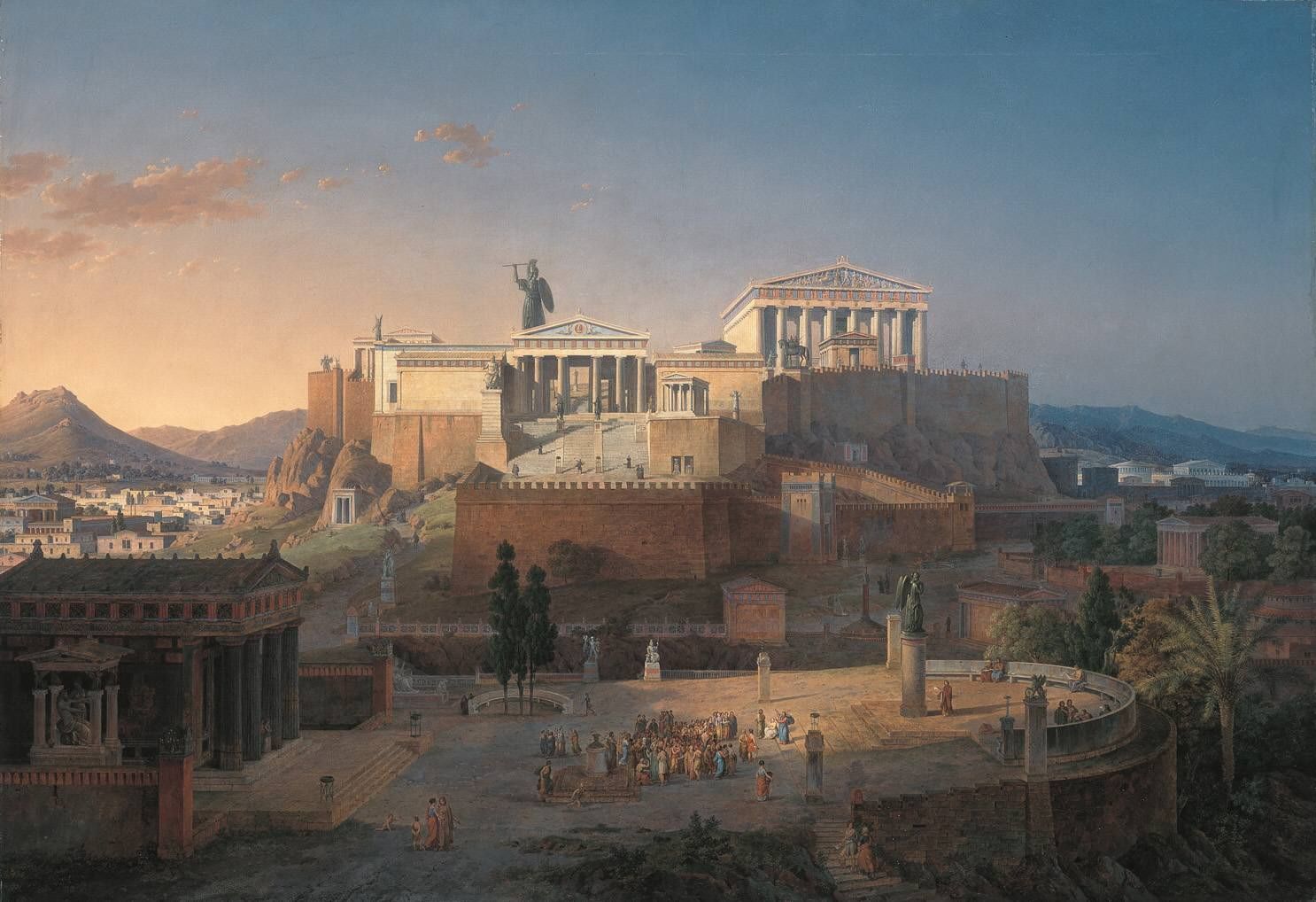
Description
What is the good for man? Is it a matter of preference, convention, political dominance, or private satisfaction? Or can the human good be known according to principles—universally, necessarily, and in truth?
To understand fully these questions, one must examine their terms and their backgrounds to the very roots.
This seminar offers a close reading of the first book of Aristotle’s Nicomachean Ethics, attending especially to the scientific character of Aristotle’s inquiry. Against both ancient sophistry and modern relativism, Aristotle does not treat ethics as a field of merely shifting opinion but begins from human action, choice, desire, and purpose in order to disclose the intelligible order by which the human good may be known. Though ethics, for Aristotle, aims at the practical rather than the speculative, but it is not therefore arbitrary nor disconnected from universal truth. Rather, it seeks the principles by which human life may be judged as fulfilled or deficient, ordered or disordered, noble or base.
Book I of the Ethics therefore raises questions of enormous significance. What does it mean for something to be an end? Why must there be a highest good? How can happiness be more than pleasure, success, honor, or contentment? What is the function proper to the human being? And how does the activity of reason disclose a good not merely for this or that individual, but for man as man?
Aristotle’s Nicomachean Ethics from Hearing register syllabusThrough careful attention to Aristotle’s own argument—against the backdrop of the Pre-Socratics and of Plato—the seminar will examine how the human good possesses universality and necessity without becoming disconnected from the concrete realities of human life. The good is neither imposed upon human nature by extrinsic causes nor fabricated by social agreement. Rather, it is discovered through the intelligibility of human nature itself: through λόγος, through action, through the ordered actuality of the soul, and through the perfection of those capacities by which man lives well.
In this way, the seminar will prepare students to hear Aristotle ex Aristotele: not as a mere historical figure, nor as providing simply one ethical theory among many, but as the thinker who provides the fundamental principles for a genuinely scientific account of human flourishing. All who wish to understand Aristotle’s thinking at a deeper level should join us in this study.
Details
All Lyceum Institute seminars include weekly readings, lectures, and live discussion sessions. The discussion sessions are recorded. This seminar includes focused readings of the Pre-Socratics, Plato’s Euthyphro, Apology, Meno, Phaedrus, Republic, Laches, Sophist, Statesman, Symposium, and Parmenides, and, of course, Aristotle’s Nicomachean Ethics. Dr. Wagner will provide his own translations of key passages, though it is recommended that students have their own copy (recommended translations: Joe Sachs, Robert Bartlett). PDFs for other works will be provided.
Priced from $60 per person.
Discussion sessions occur on Saturdays at 11:15am–12:15pm ET (see world times here), beginning on June 6 and running until August 1 (with a break at the midway point). Find more details in the syllabus and register today!
syllabus register
Leave a Reply