
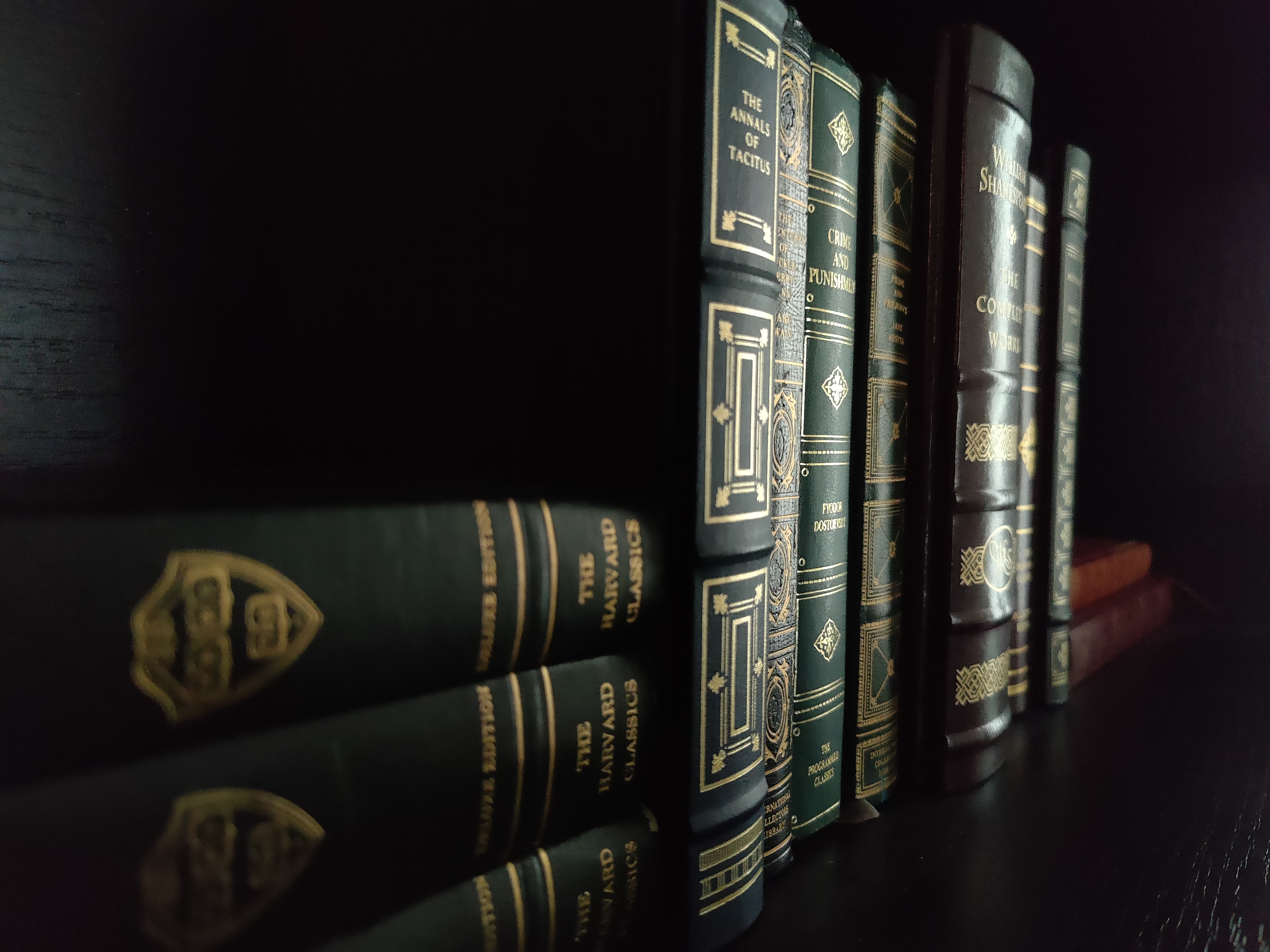
A Philosophical Happy Hour inquiring after the merits of reading the Great Books and understanding the environment of the reader.
The recovery of classical education, much in vogue today, has often been identified with the recovery of the Great Books. This is understandable: Plato, Aristotle, Augustine, Boethius, Dante, Aquinas, Shakespeare, Newman, Dostoevsky, and others do not contain mere history or a “tradition of ideas”. They present perennial questions and profound depths of insight concerning being and truth, life and death, the human good, the soul, society, God, language, beauty, and purpose. Reading them seriously aspires to heights, contrary to the shallowness, distraction, and numbness which dominates contemporary culture.
But this raises a further question: is reading the Great Books enough?
The Worth of Great Books
A “great book” is not a magical talisman. Reading it does not transform the reader. One may read Plato shallowly, Aristotle superficially, Augustine sentimentally, Dante aesthetically, Aquinas mechanically, Shakespeare ideologically, or Dostoevsky psychologically—and thus miss the very purpose of reading these great authors. Truly, the books are great and contain greatness, and someone calling Homer, Virgil, or Plutarch “boring and lame” shows himself of a vanishingly small mind.
But the purpose of reading them is not to be entertained, nor even to receive “great ideas”. Many expect the texts to, through being read, transfer wisdom to the mind of the reader. But what do we even mean by “reading”? We might be taught how; but what is it we are doing, really? Too many take reading to consist in a kind of passivity—and not to see it as an act of inquiry. But a book is not merely a vessel containing and conveying content. The habit of reading shapes how we see and understand the world outside the page. A habit of reading poorly renders us poorer interpreters of other signs, too. Moreover, if our only habit of thinking is that shaped by reading, we will lose sensibility to other modes of thinking.
The Art of Reading
Reading well, in other words, requires acquiring an art of reading. Mostly, this is something taught. I do not mean, of course, the kind of reading acquired through phonetics or any other elementary capacity to identify and correlate visual signifiers of words. Rather, I mean the art of perceiving the meaning of the texts. While exceptional minds may discover this art on their own, such minds are rare in the extreme. Rather, we learn this art by seeing it unfold in conversing with others who have thought carefully about not only the text, but the things themselves which the text signifies.
It is perhaps this last point which is most essential… and today, that which is most badly missed. Are we at risk of the blind leading the blind? Who is to lead us?
Join us as we probe into the question of educational revival, the role of the Great Books, of the education necessary to appreciate them, and more, this Wednesday (20 May 2026, from 5:45-7:15+ pm ET). Some food for thought:
- What makes a book “great”? Is it enduring historical influence, beauty, depth, conveyance of truth, capacity to provoke thought—or something else?
- Can a reader be genuinely formed by a Great Book without guidance in how to read it?
- What are the most common ways in which Great Books are misread today?
- Does contemporary education—including the efforts to retrieve the Great Books—overemphasize interpretation and opinion at the expense of the habits necessary for deeper understanding?
- Can the Great Books be separated from the traditions of commentary, disputation, and teaching through which they were historically received? Are they truly open to “everyone”, regardless of background?
- How do we recover the “arts of reading” today?
philosophical happy hour
« »
Come join us for drinks (adult or otherwise) and a meaningful conversation. Open to the public! Held every Wednesday from 5:45–7:15pm ET.
mailing list join live
Leave a Reply