
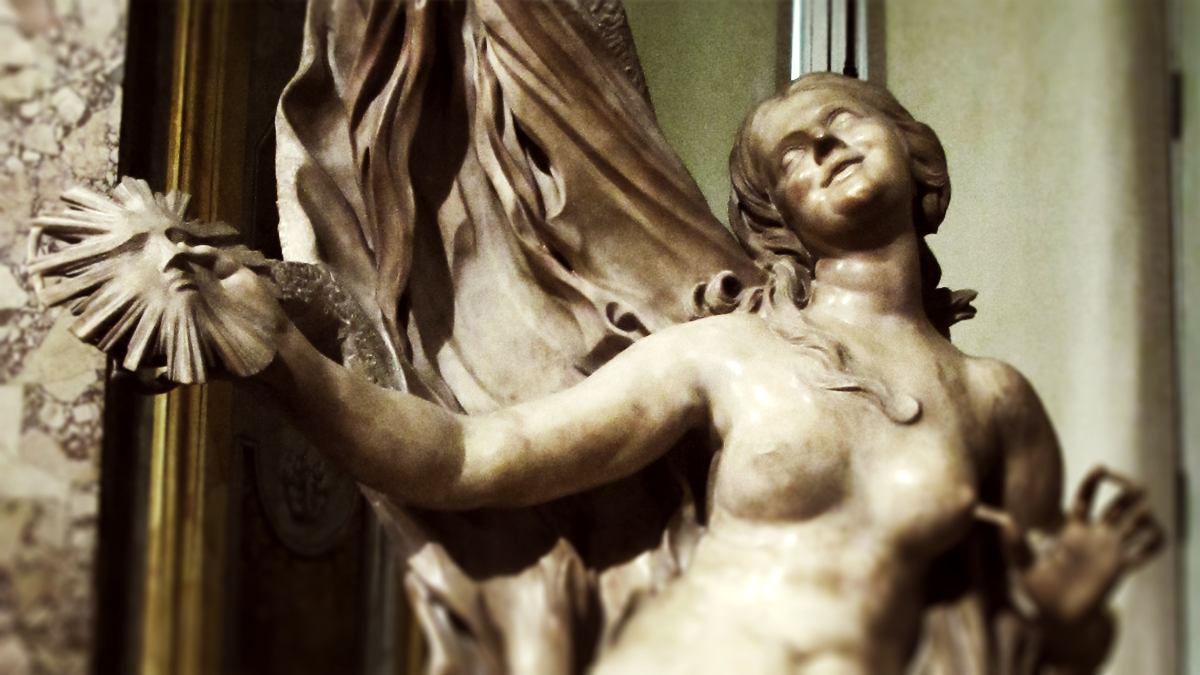
A Philosophical Happy Hour investigating the nature and definition of truth, and its necessity for our living good lives.
Do we need truth to live good lives? Do all human beings? And if so—what is the truth? How do we know it? Who “has” it? Where do we find it? What do we really mean by “truth”?
A decade ago, the term “post-truth” began to be widely used for describing our current informational (and especially political) environment. Commonly over the past ten years, we have seen public figures make claims that are unverified or unfalsifiable as part of political or ideological movements. Distrust reigns. More fundamentally, however, the very meaning of “truth” seems itself uncertain. To those seeking power, or wealth, fame, or simply some sense of self-determined meaning for their lives, this uncertainty about “truth” is unimportant—perhaps, even, useful.
But can we as human beings really live, and live well, without truth?
Sources of Truth
To answer this question, we need a better sense of what we mean by “truth”. Today, in surveying philosophical literature, we can find a variety of theories for its constitution: correspondence, coherence, “deflationism”, semantic theories, consensus theories, relativist views, various phenomenological approaches to disclosure, and so on.
Without diving into the depths and differences of these theories, it can be said that each tries to explain our experience of judgment about the world. What is that experience? Through our direct perceptual encounter with things outside of ourselves, and subsequent reflection upon ourselves as the ones experiencing these things, we find judgment about these objects to be necessary. Some appear good. Some appear harmful. The judgments we make on those appearances are sometimes correct, sometimes in error.
Thus, given the fallibility of our own judgments, we rely not only on our own perception, but the testimony of others—family, friends, colleagues, experts, authorities. We extend this interpersonal dimension to institutions—schools, government, media, and so on. For the highest and most mysterious questions, we turn to religion—not only sacred scriptures, but authoritative interpreters of it.
But underlying all these sources, we have also our own cognitive capacities, by which and against which all these claims must be evaluated. We are all inescapably responsible for the judgment of truth in our lives. Does it come from our own experience—or the testimony of others? Does it come from a scientific experiment or a journalist’s investigative reporting? From a work of philosophy? From a sacred text? A pope, an imam, a rabbi?
Metaphysics of Truth
The word “metaphysics” might sound off-putting. As philosophical subjects go, there are few if any more difficult. (There are many which are more complex; but that is a different issue!) Metaphysics is abstruse. Its subject, being, defies reduction to simple categories of our experience. Its study always leaves us with an incompleteness. But what little we can imperfectly grasp, it seems, is greater than the most perfect grasp of lesser things. And part of this greatness consists in unveiling a ground from which truth can be understood.
Here, I turn to Thomas Aquinas. Few, if any, have grappled more deeply or interestingly with the question of truth. For St. Thomas, it cannot be understood apart from being. Indeed, he sees “true” as expressing a kind of modal differentiation upon “being”. As he writes in the opening question of his Disputed Questions on Truth (De veritate):
This… is what “true” adds upon being, namely, conformity or adequation of the thing and the intellect; to which conformity… follows the cognition of a thing. Therefore, thus, the being of a thing precedes the rationale of truth, but cognition is a certain effect of truth.
The being of a thing—the entitas rei—precedes the rationale of truth; but cognition is a certain effect of truth. What does this mean?
Early registration deadline 7/15!Definition of Truth
Because this post has already grown overly long for its purpose, I will cut to the chase. Subsequent to the above quote, Thomas Aquinas provides a threefold definition of truth. Let us read and contemplate this carefully:
According to this, therefore, a threefold definition of truth and the true is found. In the first mode, it is defined according to that which precedes the intelligible rationale of truth, and in which the true is founded; and thus Augustine, in his book of Soliloquies, gives the definition: “the true is that which is”; and Avicenna in book eleven of his Metaphysics says: “The truth of any thing whatsoever is the property of its existence which establishes it as a thing”; and others say: “The true is the indivision of existence and that which is”.
And in the second mode, truth is defined according to that which formally perfects the intelligible rationale of the true; and thus Isaac says that “truth is the adequation of thing and intellect”; and Anselm in his book On Truth says: “Truth is rectitude perceptible by the mind alone”. For, this rectitude is said to be according to a certain adequation, according to which the Philosopher in book four of his Metaphysics says, that in defining truth, we say something to be what it is, or not to be what it is not.
And in the third mode, the true is defined according to the effect following [possession of the adequation]; and thus Hilary gives the definition that “the true is that which manifests and declares existence”; and Augustine says in his book On the Truth of Religion: “truth is that by which that which is, is shown”; and in the same: “Truth is that according to which we judge of inferior things”.
Many commentators on this text focus on the second mode, the “adequation” of thought and thing. There is good reason: it is what Thomas says “formally perfects the intelligible rationale of the true”. Others have attended closely to the first mode, especially after the phenomenological turn to disclosure affected principally by Heidegger in the early part of the twentieth century. But I think we ought to pay special attention, closer attention, to the third mode, concerning the manifestative dimension—especially today, in the contentious atmosphere where truth’s certainty has been challenged.
Presentation of Truth
Indeed, when we think of truth’s present-day uncertainty, it seems the principal difficulty lies in how it is presented. On the one hand, we have long been presented with a conception of “truth” that is based upon “science”: the empirical, mathematical, “factual”. Truth as what can be quantified and visibly demonstrated, what can be shown through replicable effects. But this narrow vision tends not only to lose the forest for the trees—it denies there is such a thing as a “forest” at all. In its more extreme forms, it begins to deny there are even trees; just atoms or particles.
Contrariwise, and as a growing reaction against this lifeless scientistic attitude, one finds a “symbolic” approach to truth. Rather than as a result of experiment, such an approach posits truth as the product of spiritual resonance: found more in fictional narratives that form us rightly than in laboratories or published scientific articles. But this too has its dangers: by disregarding the factual or literal significance of what is, it loses any proper guidance for what ought to be. Put otherwise, narrative unbound from mind-independent reality turns quickly into myth—stories which aim at “social success” rather than at the truth.
In contrast to both, it is the perennial end of properly philosophical inquiry to understand truth as a certain whole. Such an understanding can neither disregard the parts nor fail to seek their resolution. Without some grasp, some pursuit of this whole, I believe, we cannot live well.
Our Need for Dialogue
If you have read this far, I must suppose you are someone interested in that philosophical manner of inquiry. If so, I would like to invite you to join us this Wednesday (15 July 2026, from 5:45-7:15+ pm ET) as we seek the truth together. Dedicated participants might read the whole of Aquinas’ first question from the De veritate (my translation). We will frame our conversation through the following questions
- Can someone live well while holding false beliefs? What kind of truths are necessary for good action?
- St. Thomas defines truth as 1) founded upon being, 2) formally perfected in the adequation of intellect and thing, and 3) manifested in judgment. How do these three dimensions belong together?
- How do we corroborate and collate our direct personal experience, the interpersonal testimony of others (both familiar and institutional), and religious authority when trying to navigate questions of truth?
- What does a scientific, experimental investigation reveal about truth—both particular truths and truth as a whole? Where does it fail? Similarly, where does “narrative” or “symbolic” truth help us, and where does it fall short?
- Does truth “belong” to anyone, to any institution? What is the role of dialogue in its discovery, correction?
- What are the impediments to a meaningful presence of truth in our society, today? How can they be overcome?
philosophical happy hour
« »
Come join us for drinks (adult or otherwise) and a meaningful conversation. Open to the public! Held every Wednesday from 5:45–7:15pm ET.
mailing list join live
Leave a Reply