
When I thanked a donor for making a generous contribution to our Endowment Fund, he sent a simple reply—one I was not expecting.
“I’m glad to help and want to thank you for guiding us towards truth and good in a world sorely lacking in both.”
I’m probably not the guide the world needs (or the one it deserves), but I will blunder undeterred through the brush and thistles. If I can’t find a path, I’ll do my damnedest to forge one.
What struck me about the response, though, was that genuine gratitude. The gift of money—the donation upon which the non-profit literally lives—we all recognize as something deserving thanks. The education we provide, on the other hand, many will view as a service; perhaps, even, a commodity.
It is both encouraging—and humbling—to encounter Aristotle’s virtue of magnificence. That is, in his Nicomachean Ethics, book four, Aristotle discusses two virtues concerned with money: liberality and magnificence. Each is truly a virtue, and each concerns a spirit of free giving to what is noble and worth. Although every magnificent person has liberality, not every person having liberality can be magnificent.
Virtue of Magnificence
Two things, thus, distinguish the magnificent from the liberal:
First, the magnificent person must have great means. This in itself does not make the person virtuous, of course; one must use those means fittingly, generously. In this way, the magnificent is distinguished from the liberal in an accidental manner, even if this accident is a necessary one.
The second and more essential difference proves hard to articulate (and apparently, to translate as well): for it concerns the object of one’s gift—namely, that it is something worthy of any expense. As Aristotle writes: “The expenditures of the magnificent person, then, are great and fitting; such too, therefore, are the works involved, since in this way the expenditure will be great and fitting to the work” (1122b 2–5).
And as he explains this below: “in these considerations resides precisely what is great in the magnificent person, that is, his ‘greatness’; for although liberality is concerned with these matters, even from an equal expenditure the magnificent person will produce the more magnificent work. For the virtue of a possession and that of a work are not the same. The possession whose price is greatest (such as gold) is the most valued, but the most valued work is the great and noble one (for the contemplation of such a work is wondrous, and what is magnificent is wondrous); and the virtue of a work, its magnificence, resides in its greatness.” (1122b 12–18).
A Mission for Truth and Good
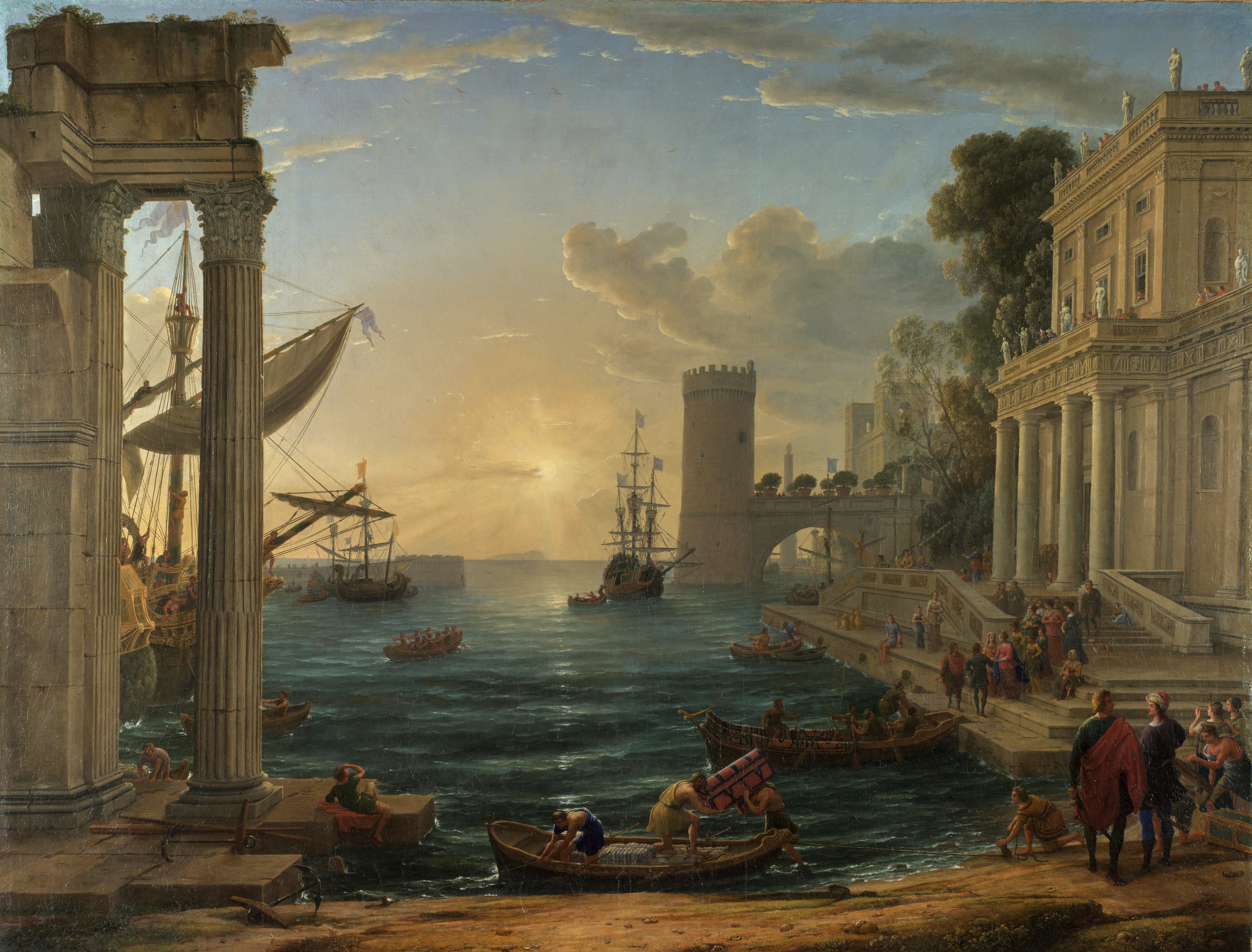
In all the world, in all that constitutes human experience, there is nothing more wondrous than truth and good. Any particular in which we experience wonder—be it a beautiful painting, a glorious church, a towering statue, the pristine air atop a mountain from which we observe a stunning vista, the immensity of the sea viewed from a quiet shore, or the insights of a great thinker in a work of philosophy or theology—serves as a vehicle for the truth and the good.
I try often to articulate the mission and the vision of the Lyceum. Probably too hard, sometimes. It is simpler said: we aim to guide people towards truth and good—yes, in a world, sorely, sadly, lacking in both.
No responses yet