

Science and Philosophy: In Dialogue?
Positivism and Science A difficult and complex question in philosophy today concerns the discussion regarding the intersection and “boundaries” of the harder empirical sciences and the distinct activity of philosophical enquiry. Given the success of scientific discovery, one temptation in the early 20th century was to claim that disciplines such as biology, chemistry, physics, and […]

Science & Engineering
Ask most people today what we mean by “science” and the answers will vary, but commonly include that it is: empirical, experimental, authoritative, highly specialized, the result of intensive training, and concerned with discoveries that are precise, accurate, and actionable. One also finds the word frequently paired with “technology”—as well as “engineering” and “mathematics” (STEM). […]
On Modern Science and Sacred Traditions
“Religion is anti-science.” Jerry Coyne, Professor Emeritus of Ecology and Evolution at the University of Chicago, once wrote the following: I’ll construe “science” as the set of tools we use to find truth about the universe, with the understanding that these truths are provisional rather than absolute. These tools include observing nature, framing and testing […]

[Fall 2022] The Faults of Modern Philosophy
This is not a seminar about modernity, but about modern philosophy—and, specifically, about the fundamental flaws (or faults) which characterize modern philosophy’s thinking. These flaws, once recognized, show their effects everywhere today: in the endless fragmentation of world, mind, self; in the intransigence of political discourse, the widening cultural divides, the polarization of extremes, and […]

⚘ Philosophy as a Habit of Cenoscopic Inquiry | Luigi Russi
Roll in... and become an active partner in the business of thinking about reality and understanding the bits and the whole of what is and what is not.
[2022 Summer] Seven Interfaces of Philosophy
Traditional philosophical disciplines crystallized over time into a list that goes something like this: logic, cosmology, phil. anthropology, metaphysics, ethics, political philosophy and aesthetics—and, in the modern age, the hybrid and rather imperialistic enquiry known as epistemology. Still, additional attention was demanded by issues lying both between or beyond these well-defined areas. Thus was generated […]
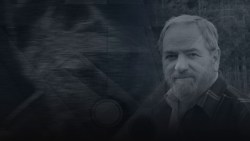
IO2S Deely – Albert the Great’s Cenoscopic Understanding of Reality
On 7 May 2022 at 11am ET (check event times around the world here) Mercedes Rubio will present on “Albert the Great’s Cenoscopic Understanding of Reality”. Prof. Rubio is a Research Associate at the University of Navarra (Spain). She recently joined the Leonardo Polo Institute of Philosophy in Chicago (USA), besides being a member of […]
