
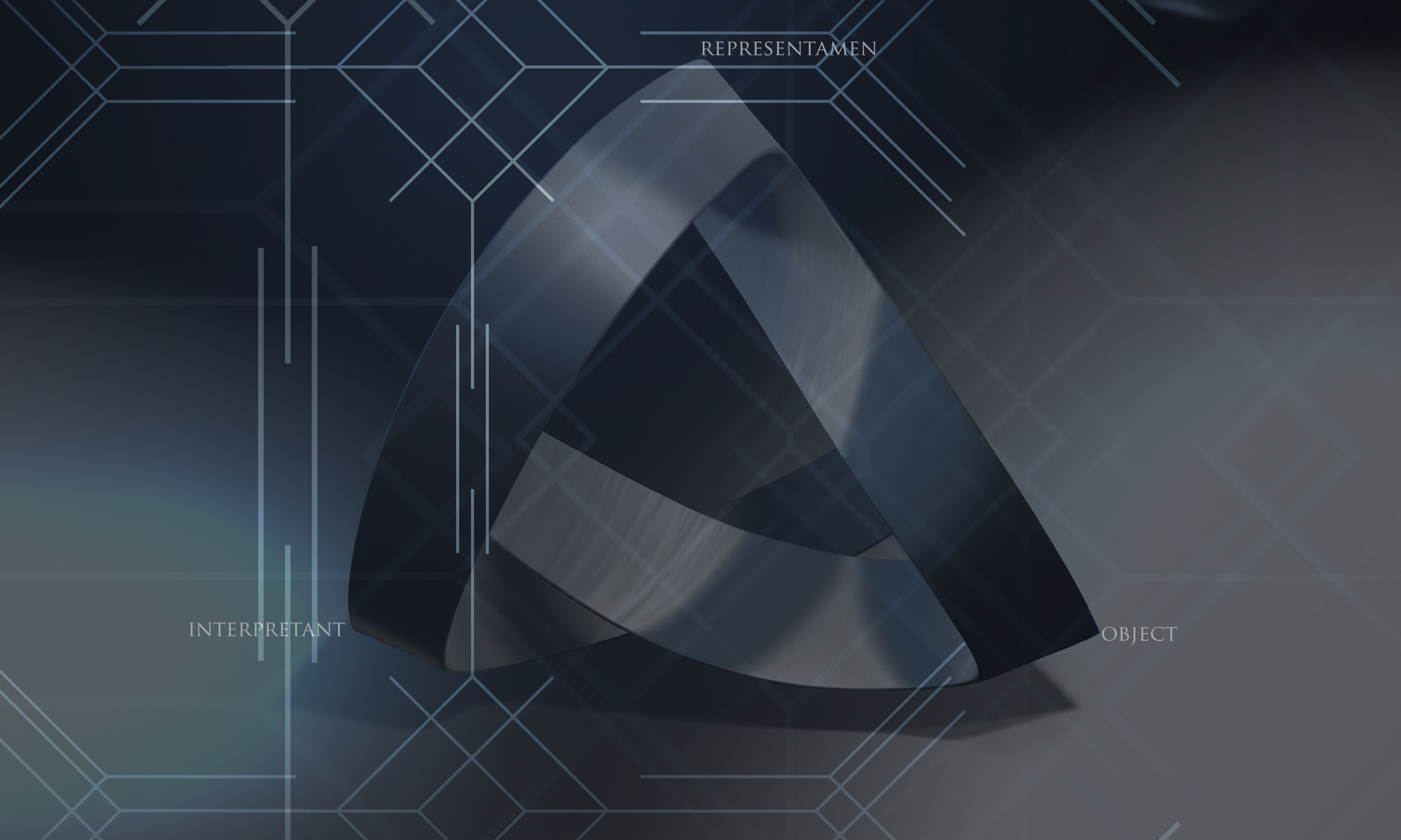
Why the Study of Signs
A Philosophical Happy Hour on why the study of signs constitutes the recovery of genuine philosophy and may result in the infusion of philosophical habits into culture. Few words common in modern “intellectual” environments sound as sophisticated or are used as carelessly as “semiotics”. Given that it is often associated with French structuralism or deconstructionism, […]

The Depth and Extension of Semiotics [an excerpt]
The following is an excerpt from the lectures for the Semiotics: Thought and Contributions of John Deely seminar offered at the Lyceum Institute. This seminar will be offered again in January (Q1) of 2025. Sign up for our Newsletter to be notified of when to register! Few truths elude our awareness, let alone our full […]
On Comedy
To complement our recent Happy Hour discussion of tragedy, let’s consider the concept of comedy. The Nature and Praxis of Comedy As permits our time and—above all—my supply of shamefully light beer, we shall discuss at our next Happy Hour the nature of comedy and the comedic.[1] To facilitate our chat, I propose we undertake […]

“From Rational to Semiotic Animal”
An extract from Deely 2006: “Semiotics, History of” in Encyclopedia of Language and Linguistics, Second Edition (London: Elsevier) v.11: 216–29. The thinkers of the Latin Age, inspired by Aristotle, liked to distinguish between remote and proximate potentialities. Thus, awareness or knowledge of the action of signs was no more than a remote possibility the long […]

C.S. Peirce on “Sham Reasoning”
An intellectually vigorous soul does not seek justification of its conclusions, but the truth of the matter. All too often, however, our reasoning is applied not to the discovery of inquiry’s foundations but thrown into the midst of a battle. This today is what we face: either you are with or against, an ally or […]

Language, Non-Existent Objects, and Semiotics
In the 19th and 20th centuries, a fever for scientific explanation of all phenomena gripped many an intellectual. Language, however, has proved resistant to the methods of modern science. Too many aspects of our experience prove irreducible to the empiriometric approach successful in disciplines such as chemistry or biology. This resistance vexes the reductionist’s mind. […]

2024 Spring: An Introduction to Semiotics
It is important to understand what I mean by semiosis. All dynamical action, or action of brute force, physical or psychical, either takes place between two subjects (whether they react equally upon each other, or one is agent and the other patient, entirely or partially) or at any rate is a resultant of such actions between […]

Tradition and Technology
Our extended senses, tools, technologies, through the ages, have been closed systems incapable of interplay or collective awareness. Now, in the electric age, the very instantaneous nature of co-existence among our technological instruments has created a crisis quite new in human history. Our extended faculties and senses now constitute a single field of experience which […]
The Ethics of New Terminology
In a famous set of scenes in the 2004 classic movie Mean Girls one of the main protagonists, Gretchen Wieners, attempts to introduce a novel expression into the discourse with her friends, insisting upon ending every conversation with the exclamation, “That is so fetch!” After failing to have the terminology catch on for so long, […]

Discussing Certitude and Intuition
A Lyceum Member writes, proposing a Philosophical Happy Hour topic: What is certitude? What role do signs play in achieving certitude? What role do signs play in intuition? Can I be certain about my mother’s love – is it intuited through signs, or through some other means? The notions of certitude and intuition have played […]
