

The Death and Evolution of Education – Epilogue: Building New Institutions
This is the epilogue to a four-part series on the Death and Evolution of Education, which seeks to explain why we cannot rely upon the university to provide the intellectual formation necessary for the common good, but must “evolve” a new approach to learning. Part I: Introduction can be found here, Part II: The Hostile […]

Seminar: The Opportunities of Technology [Fall 2025]
Announcement of our Fall 2025 seminar, “The Opportunities of Technology”—how can we redeem the technological from its current abused status? Description Details All Lyceum Institute seminars include weekly readings, lectures, and live discussion sessions. The discussion sessions are recorded. This seminar includes extensive readings, but does not require advanced philosophical knowledge (nor does it have […]

The Death and Evolution of Education – Part IV: Evolution of Higher Education
This is the fourth in a four-part series on the Death and Evolution of Education, which seeks to explain why we cannot rely upon the university to provide the intellectual formation necessary for the common good, but must “evolve” a new approach to learning. Part I: Introduction can be found here, Part II: The Hostile […]
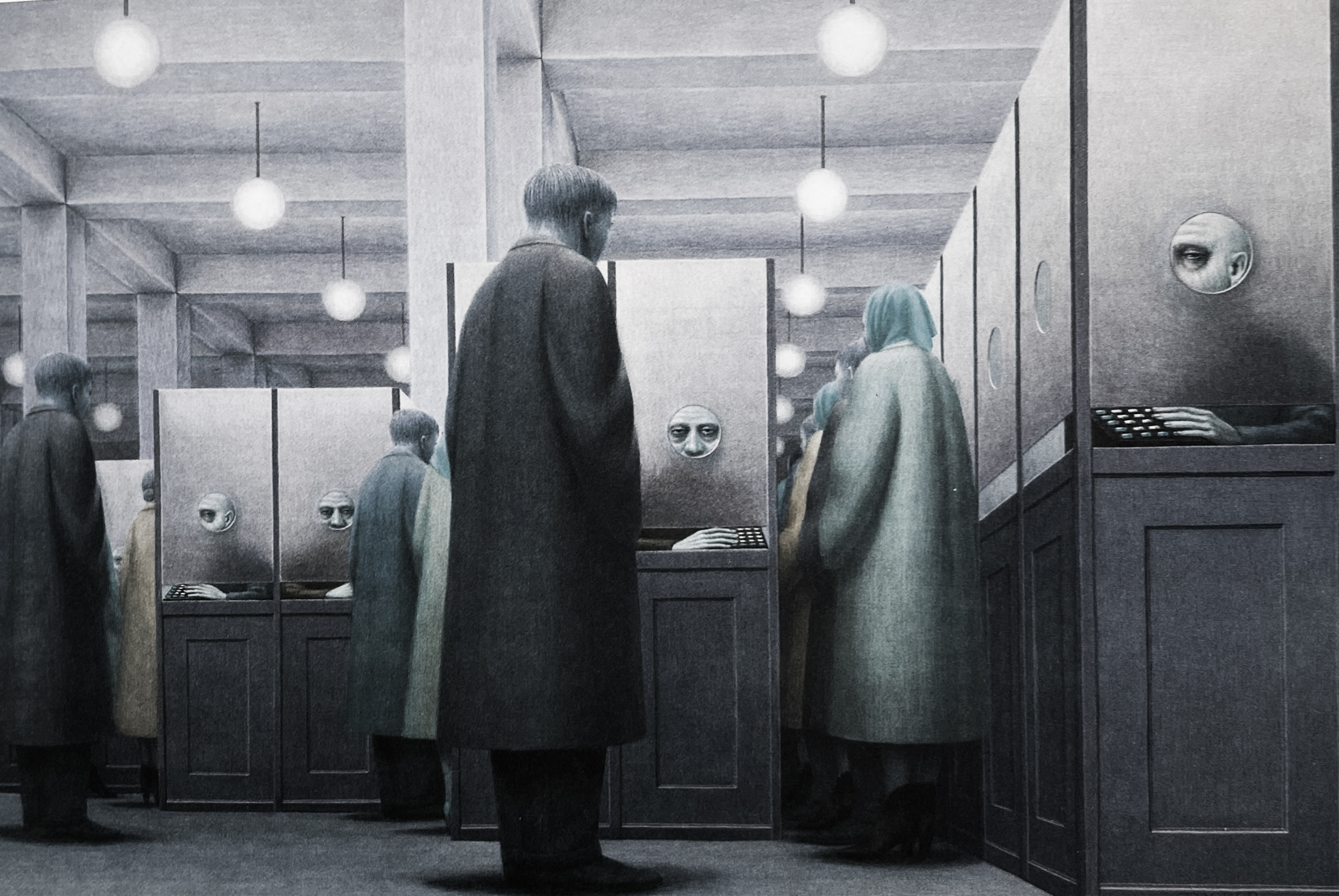
The Death and Evolution of Education – Part III: Maladapted Universities
This is the third in a four-part series on the Death and Evolution of Education, which seeks to explain why we cannot rely upon the university to provide the intellectual formation necessary for the common good, but must “evolve” a new approach to learning. Part I: Introduction can be found here, and Part II: The […]

The Death and Evolution of Education – Part II: The Hostile Environment
This is the second in a four-part series on the Death and Evolution of Education, which seeks to explain why we cannot rely upon the university to provide the intellectual formation necessary for the common good, but must “evolve” a new approach to learning. Part I: Introduction can be found here. In this, Part II: […]

Reclaiming Culture in the Digital Age
The provincial attitude is limited in time but not in space. When the regional man, in his ignorance, often an intensive and creative ignorance, extends his own immediate necessities into the world, and assumes that the present moment is unique, he becomes the provincial man. He cuts himself off from the past, and without benefit […]

Humble Beginnings for Human Education
To all our visitors, members, faculty, patrons, and benefactors: I am deeply humbled by the time, dedication, and resources that you have given to this endeavor—more so by the fact that each good we have received seems to have resulted in returns with exponential interest. A single seed, well-nurtured, may produce many fruits; and the […]

[POSTPONED] ⚘ The Semiotics of Religion in the Digital Era | Massimo Leone
On 2 December 2022 (see event times around the world here and join the live Q&A here), Massimo Leone will present on “The Semiotics of Religion in the Digital Era”. Leone is Tenured Full Professor (“Professore Ordinario”) of Philosophy of Communication, Cultural Semiotics, and Visual Semiotics at the Department of Philosophy and Educational Sciences, University […]
⚘ Semiotics and Dark Web Memes | Robert W. Gehl
On 30 September 2022 at 3pm ET (see event times around the world here and join the live Q&A here), Dr. Robert W. Gehl will present on “Semiotics and Dark Web Memes”. Dr. Gehl is a Fulbright scholar and award-winning author whose research focuses on contemporary communication technologies. He is currently the F. Jay Endowed […]

IO2S Deely – Reading and Teaching Literature Digitally
On 5 March 2022, Alexandra Milyakina, PhD, will present on “Reading and Teaching Literature Digitally: A Cultural Semiotic Perspective” at 10am ET/3pm UTC (check event times around the world here). Dr. Milyakina is a researcher at the Department of Semiotics in the University of Tartu, Estonia. The topic of PhD thesis is Digitalization of literary […]
