

On Slicing Through “Conspiracy Theories”
A Philosophical Happy Hour on how we ought to approach conspiracy theories.“The truth is out there”? Human history finds itself interwoven, in every age, with falsehood. We suffer, to steal a phrase of Umberto Eco’s, a “fatal imbalance between story and plot”—between what underlies, the reality, and what sits atop, the narrative. In recent years, […]

On the Thought of Immanuel Kant
A Philosophical Happy Hour on the structure and merits of Immanuel Kant’s key contributions to theories of knowledge and morality. Immanuel Kant’s philosophy remains a turning point in the history of thought, one that has shaped not only modern theories of knowledge—which “epistemology” has wound its way into countless other domains of human activity—but also […]

On the Renaissance and Human Dignity
A Philosophical Happy Hour on the notion of human dignity as conveyed through thinkers of the Renaissance. The philosophy of the Renaissance—a somewhat deceptive but now inescapably common name for the movement, occurring roughly (with some notable outliers) between 1350–1650, to retrieve Platonic thinking, emphasize the arts of grammar and rhetoric over that of logic, […]

On Contemporary Atheism
A Philosophical Happy Hour centered around a reading of Jacques Maritain’s essay, “The Meaning of Contemporary Atheism”. Included in a collection of essays under the title, The Range of Reason, we find Jacques Maritain’s, “The Meaning of Contemporary Atheism”. We will gather this Wednesday (2/26/25) to discuss this essay’s primary intention—explaining what it means and […]
On Habits of Speaking Well
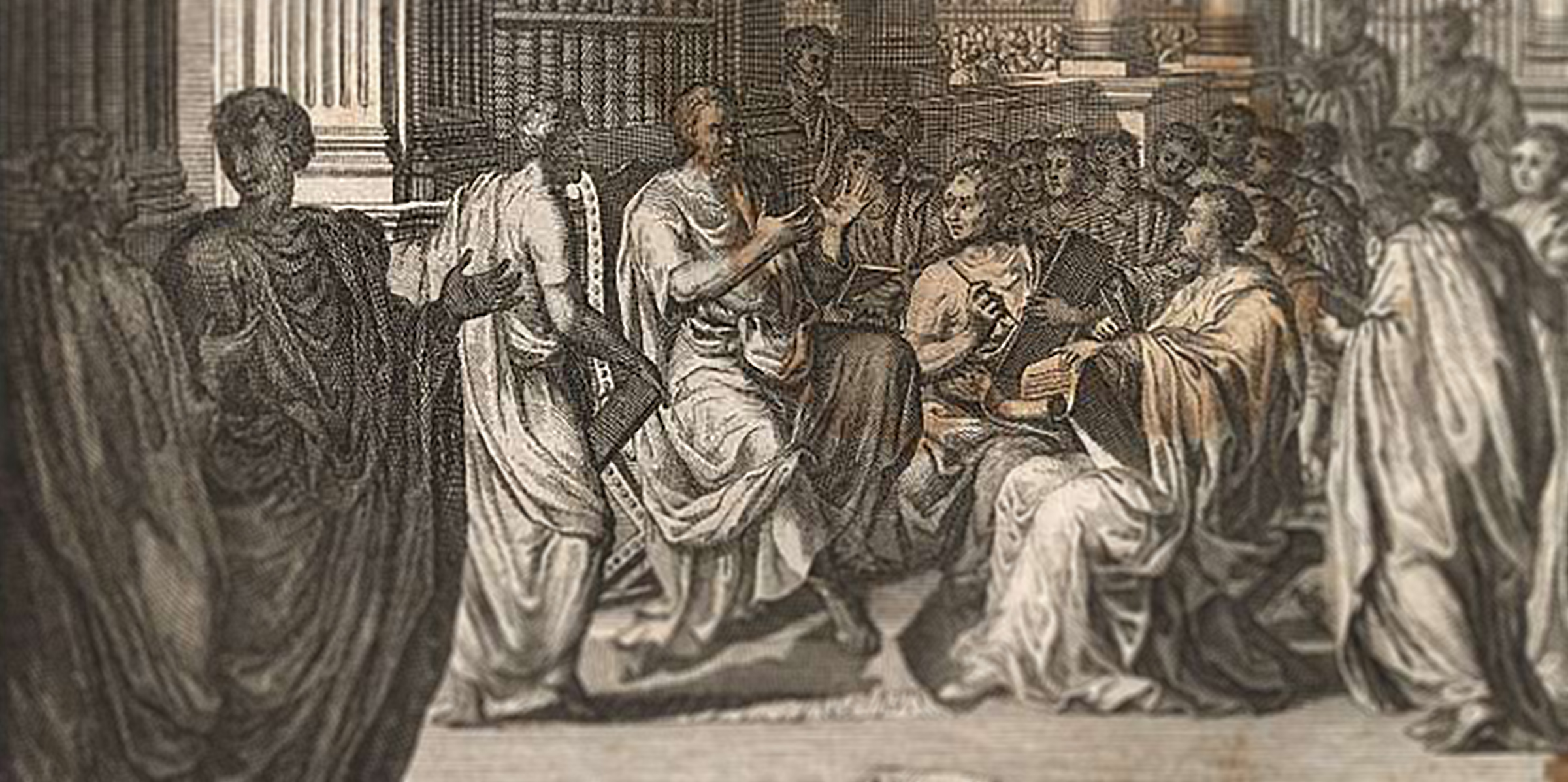
A Philosophical Happy Hour on the use of language to convey thinking: from daily conversation, to professional presentation, let us ask after the habits of speaking well. How does one learn to speak well? Many courses are offered with proposed solutions—from the WikiHow to MasterClasses and entire college majors. Yet it seems, upon brief reflection, […]

On Artistic Judgment
A Philosophical Happy Hour on the habit of artistic judgment and both the means and importance of its formation. Why do we care about art? (We will bypass the question of why we care about anything.) It provides us no corporeal benefits, except perhaps an opportunity or excuse for rest and relaxation. Were this the […]

Defragmenting Mental Disorder
A Philosophical Happy Hour on better habits of order. Ours is a mentally broken society. This brokenness has been unveiled, in many ways, by the internet: operating under a premise of anonymity (at the very least of distance from personal judgment), there is less fear to inhibit many from sharing their brokenness. Such sharing may […]

Fall 2023: Thomistic Psychology – Habits and Experience
In a world where habits often seem synonymous with unconscious and automatic reactions, it is time to revisit and explore the true depth and meaning of this vital aspect of human existence. The Lyceum Institute is pleased to present an 8-week intensive seminar on “Thomistic Psychology: Human Habits and Experience of the World.” Guided by […]

Seminar Catalog for 2023
The year 2022 saw the Lyceum offer a spate of diverse and fascinating seminars. so how can we top this wonderful past year of seminars? Why, with a new year of wonderful seminars, of course! We are covering a broad range of thinkers and ideas this year: Aristotle, Aquinas, John Henry Newman, John Poinsot, Yves […]

[2022 Winter] Introduction to Philosophical Thinking
What is philosophy? Is it something we study—as subject, like biology or literature? Is it something each of us has, individually—as in, “my personal philosophy”? Is it a relic of history? An intellectual curiosity? A means to impress at cocktail parties and on social media? Or perhaps—as this seminar will attempt to demonstrate—philosophy is a […]
