

New Faculty Fellow: Herbert Hartmann
The Lyceum Institute is delighted to welcome a third new Faculty Fellow for 2025-26, Dr. Herbert Hartmann. I received my M. A. and Ph.D. in philosophy from the University of Toronto, where I studied under such distinguished Thomistic scholars as Fathers Joseph Owens, Armand Maurer and James Weisheipl, and, as well, Anton C. Pegis, under […]
New Faculty Fellow: Jacob Andrews
The Lyceum Institute is happy to welcome a second new Faculty Fellow for 2025, Dr. Jacob J. Andrews. Salvē! I hold a PhD in medieval philosophy from Loyola University Chicago and graduate degrees from Marquette University and Katholieke Universiteit Leuven. I teach Latin and Logic to students aged ten to eighteen at Covenant Classical School, and am […]

2024 Spring: An Introduction to Semiotics
It is important to understand what I mean by semiosis. All dynamical action, or action of brute force, physical or psychical, either takes place between two subjects (whether they react equally upon each other, or one is agent and the other patient, entirely or partially) or at any rate is a resultant of such actions between […]
Medieval Semiotics
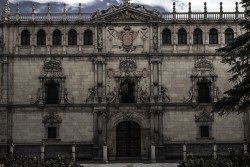
Though “semiotics” is a word coined only in the late 17th century—and used consistently and meaningfully beginning only in the late 19th—the study of signs and their actions goes back millennia. During those thousands of years, some of the most important contributions were made during the age often called “Medieval” (though it would be better […]

John Poinsot – Cursus Theologicus
Cursus Theologicus The work of John Poinsot, also known as Joannes a Sancto Thoma (though as John Deely noted, his name has often been given in many other variations, across English, Portuguese, Italian, Spanish, French, and Latin), has long been the victim of great neglect. His Cursus Philosophicus was critically-edited and published in the 1930s under the […]
Aquinas: De Veritate [Part I]
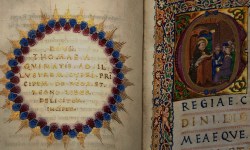
Quid est veritas? A question, doubtless, familiar to many: “What is truth?” Today, whether put into those exact words or others like them, we witness a similar disdain for beliefs that there exists a truth and that we may know it. Seldom, however does this scorn rise from genuine intellectual conviction in the posit of […]

[Summer 2022] Semiotics: Thought and Contributions of John Deely
Semiotics—toward which human beings took their first explicit steps in the beginning of the Latin Age of philosophy, in the work of St. Augustine of Hippo (350–430AD), an age that culminated in the thinking of John Poinsot (1589–1644)—is that by which we begin in a true postmodernism. This is one of the key and perhaps […]

IO2S Deely – No mere ‘flyover country’: some historical notes regarding the Schola Thomae as an integral context of the thought of Dr. John Deely
A Ruthenian Catholic, husband, and father, Matthew K. Minerd is a professor of philosophy and moral theology at Ss. Cyril and Methodius Byzantine Catholic Seminary in Pittsburgh, PA and Faculty Fellow for the Lyceum Institute. His academic work has appeared in the journals Nova et Vetera, the American Catholic Philosophical Quarterly, Saint Anselm Journal, Lex […]
IO2S Deely – Duns Scotus on Signs: Common Nature, Haecceity, and Signification
On 16 January 2022 at 12pm ET/11am CT (5:00pm UTC – check times around the world here), Dr. Paniel Reyes Cárdenas (author of Scholastic Realism: A Key to Understanding Peirce’s Philosophy and many other works across a broad philosophical range) will present on the contributions of John Duns Scotus to the history of semiotics. As […]
