Controversies: Faith and Reason [Spring 2026]
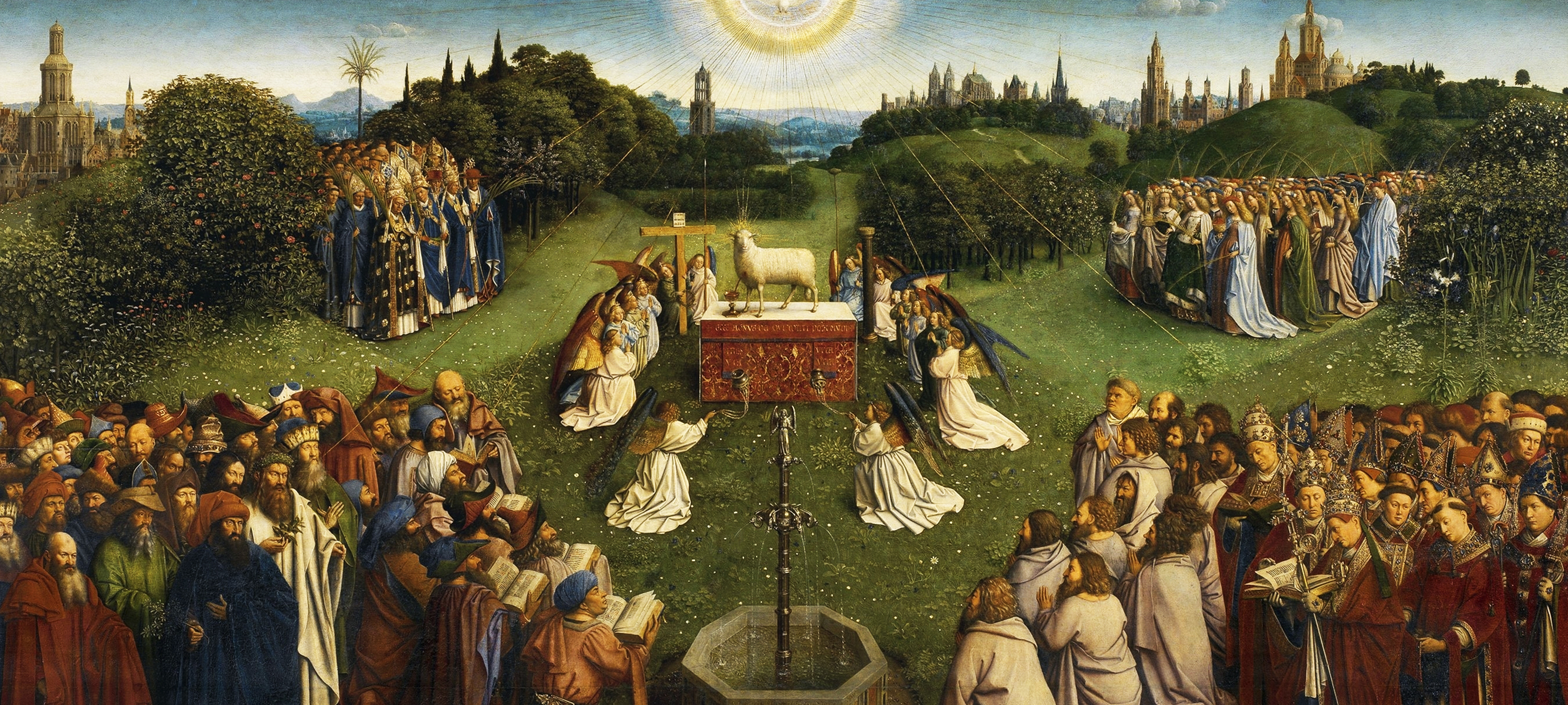
Description Our guiding questions: Is the act of faith or belief in revelation distinct in kind from the operations of reason? Can reason prove faith? Can reason disprove faith? Can reason show faith as compatible with reason? | How is the faith to be made known? Sacred texts, whether the Bible, Qur’an, or Torah, have […]
Semiotics: Thought and Contributions of John Deely [Spring 2026]
Description To understand and affect this maturation into postmodernity, we will turn our attention in this seminar to the major contributions to semiotics given by Deely: the proto-semiotic history, an expanded doctrine of causality, the retrieved and clarified notion of relation, the concept of physiosemiosis, the continuity of culture and nature, the notion of purely objective reality, and the real interdisciplinarity which semiotics fosters. This is […]
Reframing Our Understanding of Technology
Technology is often discussed and conceived in extreme terms: triumphant progress, mastering nature; or self-inflicted catastrophic destruction. But rarely is the question asked—and even more rarely answered well—what is technology? How are we affected in ourselves by our technologies? The 2024 Difficulties of Technology seminar, conducted within the multiyear Humanitas Technica project, asked these and […]
What Classical Education Needs
In this conversation, Geoffrey Meadows (Head of Upper School, Tulsa Classical Academy) discusses being a “hunter of causes” and the need to translate enthusiasm into hard work in classical education. Together with Dr. Kemple, he discusses the importance of philosophy, the impact of technology on education, and the necessity of moral formation in students. Geoffrey […]

Felicitates de Quodlibet, III.1
A Philosophical Happy Hour on… whatever! The first installment in our Felictates de Quodlibet series for 2026, in which we talk about whatever we want, so long as it is interesting, and for as long as we are interested. Or, to put this otherwise: do you have a philosophical question—any question whatsoever—you want seriously to […]
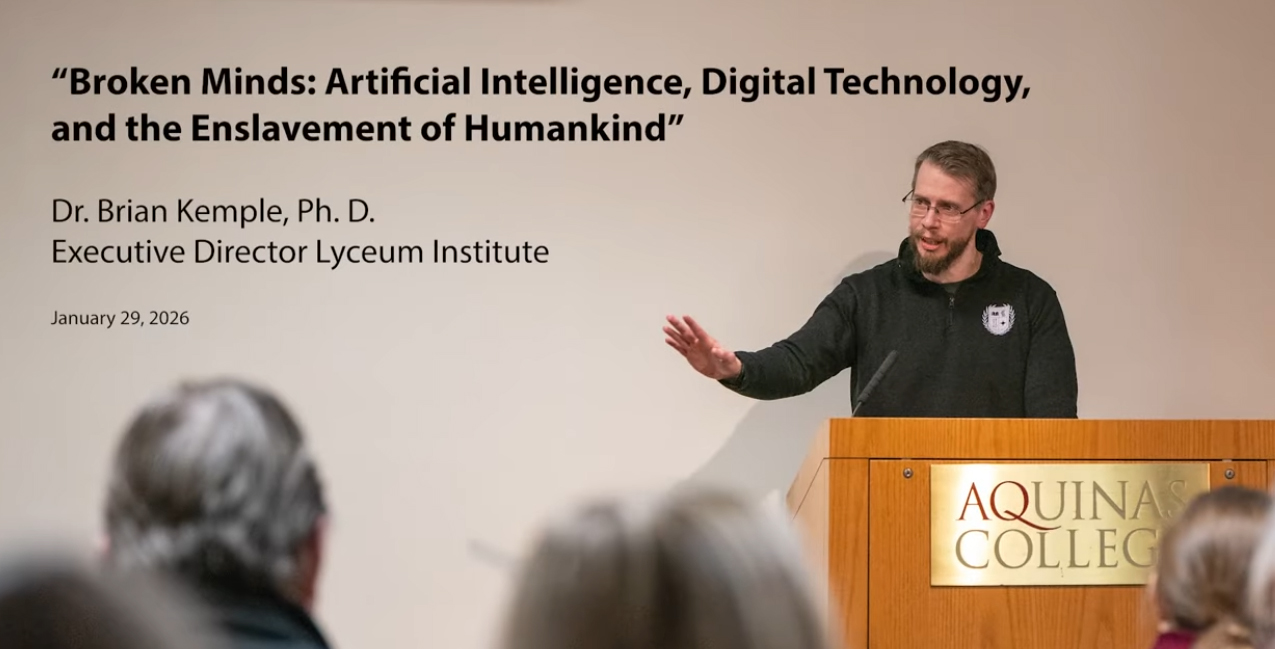
Lecture: Broken Minds
On 29 January 2026, I (Brian Kemple) gave the annual Aquinas Lecture at Aquinas College in Grand Rapids, Michigan. This lecture, including Q&A, was recorded and is now available online. Watch on YouTube.
What Makes a Thinker Worth Exploring?
A Philosophical Happy Hour asking why (or whether) we should read some thinkers over others, explore some ideas before the rest, and take some philosophers more seriously than others. A question surfaces again and again in philosophical discussion, sometimes with impatience: why do certain thinkers keep returning? Why are Plato and Aristotle, Augustine and Aquinas, […]