

Reimagining Politics: Seminar on the Proposal for a Postliberal Order
What comes after liberalism? In some sense for centuries, and most definitely for the past several decades, Western politics have been shaped by a largely presupposed consensus towards liberalism—an ideology founded upon individual autonomy, procedural neutrality, and technocratic governance. But today, cracks are widening in presumed foundation. Whether in the erosion of public trust, the […]

On the Postmodern, Postliberal, and Postacademic
A Philosophical Happy Hour on the meaning of the postliberal, the postmodern, and the postacademic—and what we signify by “post-”. We do not think often enough about the meanings of words, especially those that have entered into the popular lexicon. The term ‘postmodern’ provides a good example of this unthinking, and in two ways. First […]
On Unwitting Conscripts
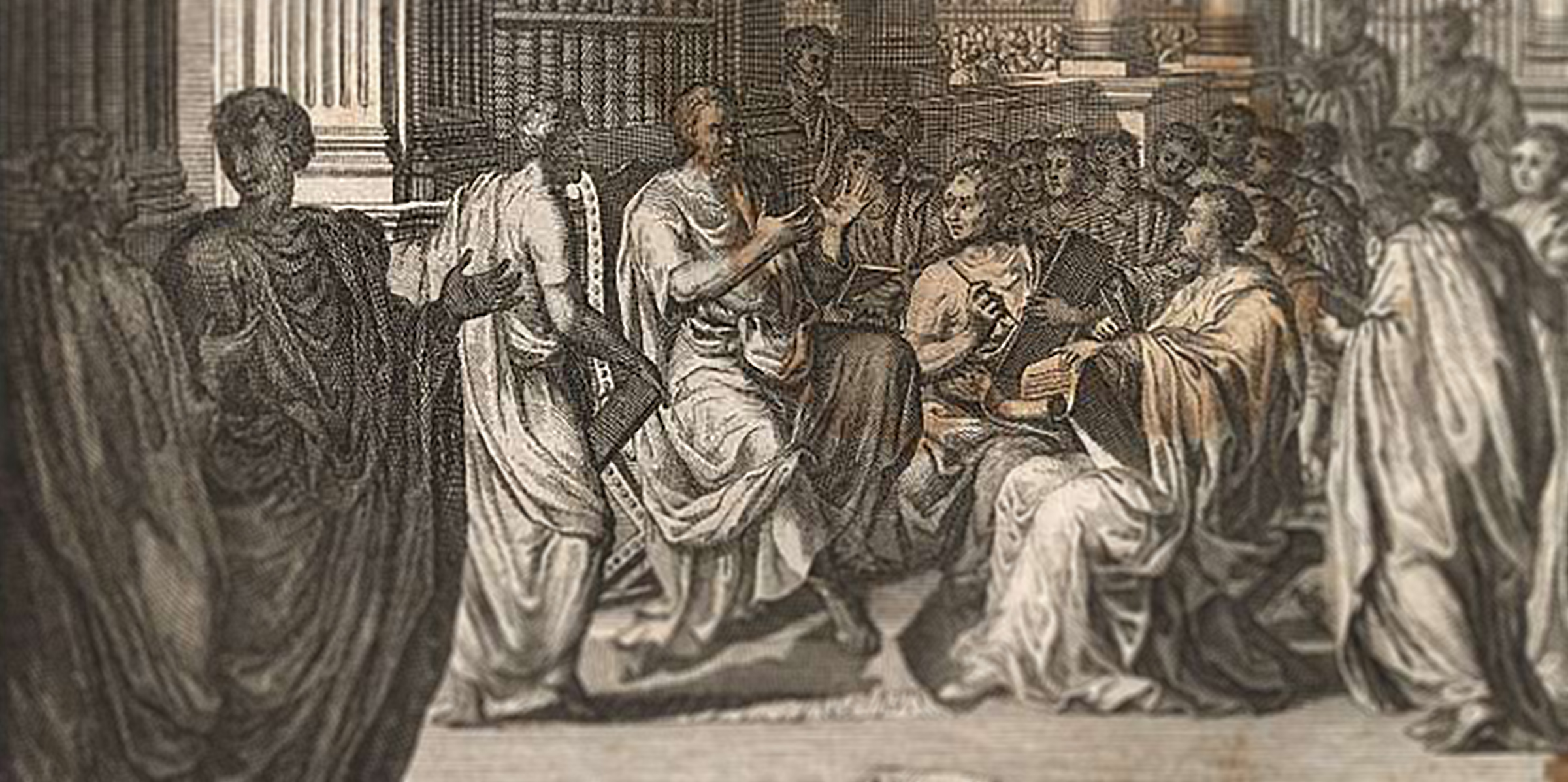
In 1970, Marshall McLuhan stated that “World War III is a guerrilla war of information with no division distinction between military and civilian participation” (Culture is Our Business, 66). Two things here deserve our notice. The first is that this war has already begun; the second is that many people have been unwittingly conscripted into […]
2024 Summer: A Thomistic Defense of Democracy
Can democracy be saved? Ours, on both the left and the right, seems to be a world viewed increasingly through post-liberal lenses. Must we return to a strict hierarchy if we are to abandon the “liberal experiment” that has rendered increasing ailment in recent decades—if, that is, we are not to lapse into socialist totalitarianism? […]

Obeying Unjust Laws
St. Thomas defines law in Summa Theologiae I-II q. 90 aa. 1-4. It is an ordinance of reason for the sake of the common good made by someone bestowed with the care of the common good and promulgated. Hence, human law, which St. Thomas treats in I-II q. 95, must share the above definition in […]

Implementation of Subsidiarity
The principle of subsidiarity—perhaps longest known for its role in Catholic social teaching though also described as “fundamental to the functioning of the European Union”—has an undeniable allure for all serious persons. Succinctly described, subsidiarity holds that governing decisions ought to be made at the lowest level of competence. In a concrete example, decisions about […]

Do Ideas Have Power?
“The potency of ideas lies in their ability to influence thinking, motivate action, shape cultures, and alter the course of history.” Why do we care so much about our ideas? What is an idea? What is power? Three questions that are familiar to human history, but, perhaps, too-little examined today. That ideas are important seems, no doubt, widely accepted […]

Complete Lyceum Catalog – 2024
We have completed our 2024 catalog and preliminary schedule for all seminars and courses! While these are, of course, always subject to change (life being ever-unpredictable), I am happy to announce this very exciting slate of philosophy seminars for the upcoming year: Seminar Catalog 2024 Winter (Q1) Introduction to Philosophical Thinking – Brian Kemple Phenomenology: […]
On the “Culture War” and Formal Causality
The term kulturkampf, literally “culture struggle”, has long-since been translated into English as “culture war”. I have no desire to participate in a “culture war”. Indeed, as I will argue here, the very notion of the “culture war” is not only misguided but harmful. But as someone living within a culture, however, I do believe […]
Connection of the Philosophical and the Pragmatic
One could argue—and I have myself many a time—that never before in human history has there been greater need for the presence of philosophical habit and the realization of philosophical wisdom. We find ourselves engaged in constant communication. Therefore, we find ourselves also immersed ever more in ideas. A theoretical grasp of those ideas seems […]
