

The Death and Evolution of Education – Epilogue: Building New Institutions
This is the epilogue to a four-part series on the Death and Evolution of Education, which seeks to explain why we cannot rely upon the university to provide the intellectual formation necessary for the common good, but must “evolve” a new approach to learning. Part I: Introduction can be found here, Part II: The Hostile […]

The Death and Evolution of Education – Part IV: Evolution of Higher Education
This is the fourth in a four-part series on the Death and Evolution of Education, which seeks to explain why we cannot rely upon the university to provide the intellectual formation necessary for the common good, but must “evolve” a new approach to learning. Part I: Introduction can be found here, Part II: The Hostile […]
The Death and Evolution of Education – Part III: Maladapted Universities
This is the third in a four-part series on the Death and Evolution of Education, which seeks to explain why we cannot rely upon the university to provide the intellectual formation necessary for the common good, but must “evolve” a new approach to learning. Part I: Introduction can be found here, and Part II: The […]

The Death and Evolution of Education – Part II: The Hostile Environment
This is the second in a four-part series on the Death and Evolution of Education, which seeks to explain why we cannot rely upon the university to provide the intellectual formation necessary for the common good, but must “evolve” a new approach to learning. Part I: Introduction can be found here. In this, Part II: […]
Why the Study of Signs
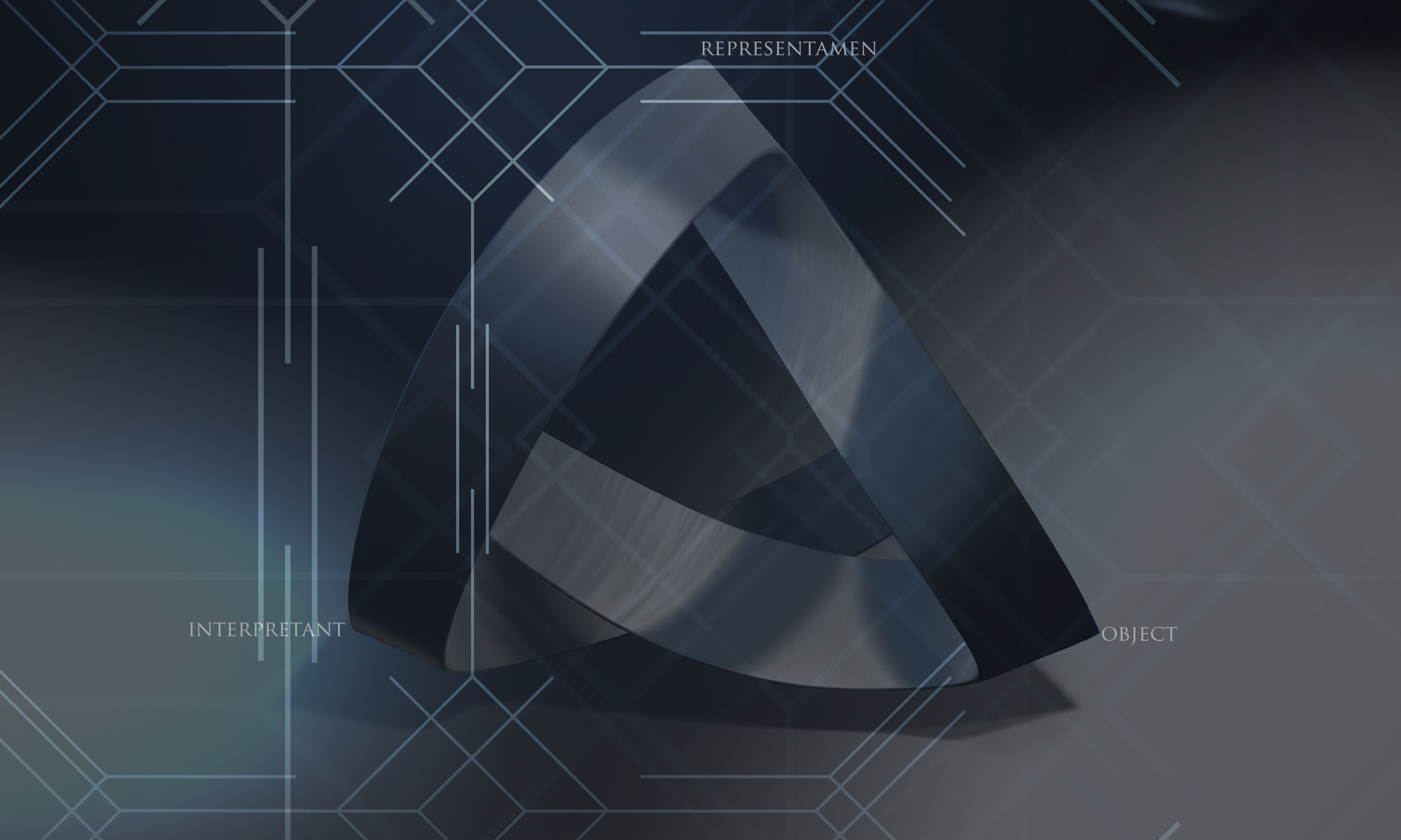
A Philosophical Happy Hour on why the study of signs constitutes the recovery of genuine philosophy and may result in the infusion of philosophical habits into culture. Few words common in modern “intellectual” environments sound as sophisticated or are used as carelessly as “semiotics”. Given that it is often associated with French structuralism or deconstructionism, […]

On Reality, Realism, and the “Real World”
A Philosophical Happy Hour on what makes something “real”, what is “reality”, what is “realism”, what belongs to the “real world”, how we know “the real”, and why it is important. “Just wait until you get into the real world.” “That isn’t a real problem.” “Get a real job.” We have all heard expressions such […]

Interview: On Being as First Known
St. Thomas Aquinas presents in the corpus of his work (at, e.g., De veritate q.1, a.1, Summa Theologiae Ia-IIae, q.94, a.2, and In Metaphysicorum, lib.4, lec.3, n.605) the claim that what the intellect first conceives is being and that the intellect further resolves all conceptions into being. Illud autem quod primo intellectus concipit quasi notissimum, […]

A Philosophical Inquiry into Facts
What is a fact? The English word, used so commonly throughout the modern world, comes from its Latin cognate, factum: an event, occurrence, a deed, an achievement. But since the mid-17th century, under the auspices of the Enlightenment’s so-called “empiricism”, the word has been taken to be a “reality” known as independent of observation. The […]

On “Mental Health”
We, as a society, are not well. Reports on “mental health” in the United States of America, in particular, estimate at least 25% of adult Americans meet the criteria for one or another mental illness. This number has only been increasing in recent decades, despite the large number of professionals who have entered in the […]

On Signs and Simulations
On 15 March 2023, the Lyceum Institute held a Philosophical Happy Hour on the topic of “simulation hypotheses”. This essay draws upon the observations offered and explored in that conversation and attempts a synthetic presentation of the collective insights of our community, with the addition of reflection and research by the author. These Happy Hours […]
