
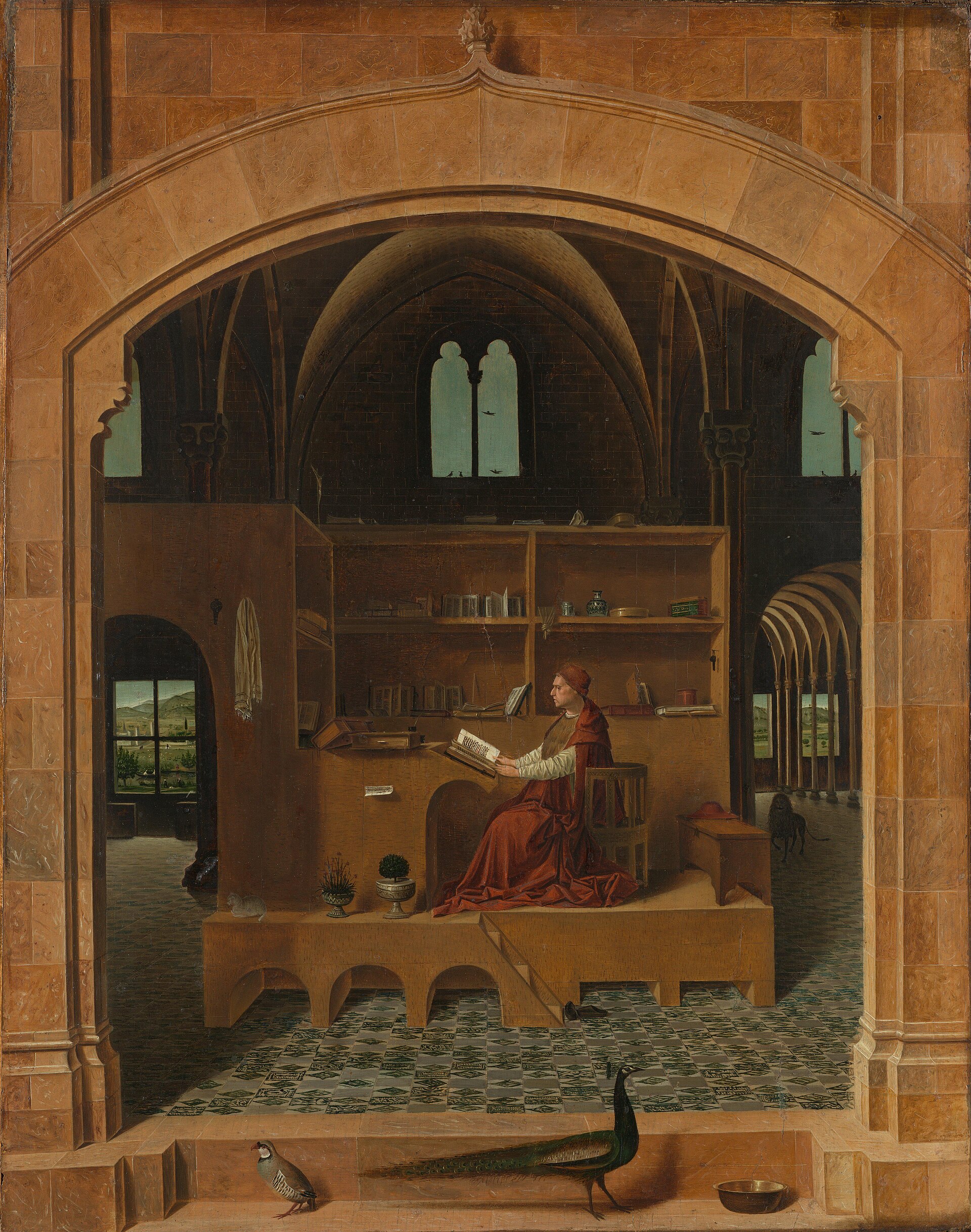
On Silence, Sophistry, and the Preservation of Wisdom
Why we need digital monasteries for the layman, and what that means. The Roman Empire was inarguably among the greatest imperial powers ever to have existed. It spanned the breadth of all Europe, crossed into Britain, swept south along the Mediterranean, and held much of the world in order for hundreds of years. But over […]
John Poinsot – Cursus Philosophicus
Cursus PHILOSOPHICUS John Poinsot, O.P., also known as Joannes a Sancto Thoma (1589–1644) wrote two major works in his lifetime: the Cursus Theologicus, on which incomplete text he worked from 1635 until 1643, when he was requested to become counselor and Royal Confessor to King Philip IV of Spain. While attending to this new duty, […]

On the Allure of Secret Knowledge
A Philosophical Happy Hour on the allure of secret knowledge—as found in esotericism, gnosticism, the occult, and secret societies. of every kind Spend enough time on the internet—and “enough” is not very long—and you will encounter either an individual or a group proposing to know something that you do not. They will intimate that this […]

Affiliates – Fall Term 2024
Our friends at the Catherine Project have announced their Fall term offerings for 2024, including a new “Life of the Mind” seminar that provides an initial foundation for study of the great books! The Catherine Project is fully free, though they have limited enrollment so apply today. You can also view their larger Fall catalog […]

C.S. Peirce on “Sham Reasoning”
An intellectually vigorous soul does not seek justification of its conclusions, but the truth of the matter. All too often, however, our reasoning is applied not to the discovery of inquiry’s foundations but thrown into the midst of a battle. This today is what we face: either you are with or against, an ally or […]

Expertise vs. Wisdom
Much has been said in the past decade about the “elite”—those with significant wealth, power, influence, and education (or, rather, the reputation garnered from attending specific schools, regardless of education actually attained)—and little of it positive. In our culture of political polarization and populism, to be “elite” is to be painted with two black marks: first, […]
John Poinsot – Cursus Theologicus
Cursus Theologicus The work of John Poinsot, also known as Joannes a Sancto Thoma (though as John Deely noted, his name has often been given in many other variations, across English, Portuguese, Italian, Spanish, French, and Latin), has long been the victim of great neglect. His Cursus Philosophicus was critically-edited and published in the 1930s under the […]

⚘ John Deely on the Role of Signs in Human Knowing | Banzelão Teixeira & IO2S Closing Ceremony
Banzelão Teixeira presents “A Semiotic Perspective of Cognition: John Deely on the Role of Signs in Human Knowing” for the IO2S & Closing Ceremonies.

Fall Seminar Previews
METAPHYSICS: THE DEPTHS OF ACT & POTENCY “In long Indian file, as when herons take wing, the white birds were now all flying towards Ahab’s boat; and when within a few yards began fluttering over the water there, wheeling round and round, with joyous, expectant cries. Their vision was keener than man’s; Ahab could perceive […]

Wisdom & Culture
Too few are the hours dedicated in our day to the pursuit of contemplation: not only the fruits of genuine meditative insight, but also the practice whereby it becomes possible. Yet the philosophical desire sits in all our hearts, realized or not. Join us in either or both of these wonderful seminars to weave philosophical […]
