

Language, Non-Existent Objects, and Semiotics
In the 19th and 20th centuries, a fever for scientific explanation of all phenomena gripped many an intellectual. Language, however, has proved resistant to the methods of modern science. Too many aspects of our experience prove irreducible to the empiriometric approach successful in disciplines such as chemistry or biology. This resistance vexes the reductionist’s mind. […]

A Brief Life of St. Columban
“The missionary labours of the Irish were not confined to Great Britain, but extended far and wide through the west of Europe. In the sixth and seventh centuries, Irish monasteries were founded in Austrasia and Burgundy, Italy, Switzerland, Bavaria; they were established among Frisians, Saxons, Alemanni. And as centres of Latin education as well as […]

On the Meanings of “Object”, “Objective”, and “Objectivity”
The word “language” often suffers a confusion in use because of a partial equivocation in signification. Sometimes, we use it to signify the species-specifically human capacity to express semantic depth pertaining to a being known as independent of our cognitive activity; in other words, we use the word “language” to indicate our ability for signifying […]

Philosophy’s relation to Natural and Positive Law
Can we understand the law in a non-philosophical manner? Can the jurist afford to disdain questions of philosophy? We must have consensus in certain disciplines, and the positive law is one of them—but what grounds this consensus? Must we have a philosophical theory of the natural law? Can law truly be itself without a relation […]
On Architecture and Order
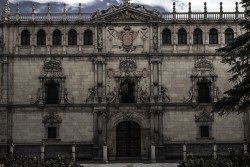
What is architecture? How can we define it? As a human art, it seems that we cannot conceive of what it is fully or properly without efficient and final causes: certainly it is by human beings, and somehow for human beings. But for human beings to do… what? What benefit does the architect render human […]

Falling in Love with an Easy Life
An excerpt from the concluding pages of Solzhenitsyn’s Gulag Archipelago, Part II, recollecting time spent in the Butyrki transit prison of central Moscow. In particular, he here notes a contrast with the prisoners of his own generation—most of whom fought in the Second World War with some pride in their service for the Motherland—and the […]
On Definition and Language
“Nothing properly signifies itself.” To signify: this is to convey something other, to something other. Signification thereby contrasts with representation by their respective extensions, which can be either “other-representation” or “self-representation”. When you see a portrait, this represents something other than itself, namely, the person portrayed. When you see that person herself, her visible being […]

John Deely on the “Practical Value” of Logic
Peirce rightly speaks of the practice of boasting of the utility of this or that science as a “nauseating custom” (1898a, alt. ver. : CP 1.667). This is because the practice in question almost invariably is indulged in for purposes quite unrelated to the true character of the science in question or to the advance […]
What is Music?
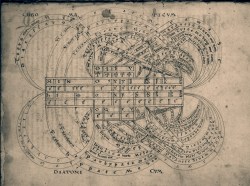
Few, if any of us, go very long without hearing music. We have available to us more hours of streaming than ever we could hear in several lifetimes. It sits available through every device; it attends nearly every commercial, every television show. The quality of a movie may be greatly enhanced, or perhaps even ruined, […]

John Deely on Deconstruction
What is deconstruction? As John Deely makes clear, deconstruction is a tool rather than a system, and if made a system, becomes a dead-end.
