

Lecutre: Self-Sufficiency of Happiness in the Nicomachean Ethics
In 2024, the Lyceum Institute this thoughtful interpretation of a perennial difficulty in interpreting Aristotle’s Nicomachean Ethics, presented by Joseph M. Cherny, PhD Candidate at the Center for Thomistic Studies at the University of St. Thomas in Houston, TX. Mr. Cherny asks: how is happiness self-sufficient? Does it find fulfillment in one good, or a […]

Lecture: The Analogous Use of Words
Last year, the Lyceum Instituted hosted Dr. Domenic D’Ettore (Dean, Division of Liberal Studies and professor of Philosophy with the Center for Thomistic Studies at the University of St. Thomas, TX), a careful and insight scholar of the Latin Thomist tradition and an expert on analogy. Drawing on his great expertise, Dr. D’Ettore presents for […]

Jefferson, Natural Rights, and the Sources of the Declaration of Independence
Presenting the fifth in our Colloquium series for the year 2024, Dr. John Pinheiro (PhD in History, Director of Research at the Acton Institute for the Study of Religion and Liberty), challenges the common narrative that reduces Thomas Jefferson’s thought in writing the Declaration to the philosophy of John Locke. Dr. Pinheiro was previously professor […]
Self-Sufficiency of Happiness in the Nicomachean Ethics
Our Colloquium series for the year 2024 continues with a thoughtful interpretation of a perennial difficulty in interpreting Aristotle’s Nicomachean Ethics, presented by Joseph M. Cherny, PhD Candidate at the Center for Thomistic Studies at the University of St. Thomas in Houston, TX. Mr. Cherny asks: how is happiness self-sufficient? Does it find fulfillment in […]
The Analogous Use of Words
Continuing our Colloquium series for the year 2024, we are delighted to host Dr. Domenic D’Ettore (Dean, Division of Liberal Studies and professor of Philosophy with the Center for Thomistic Studies at the University of St. Thomas, TX), a careful and insight scholar of the Latin Thomist tradition and an expert on analogy. Drawing on […]
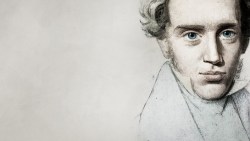
Hearing the Word of God
Hearing the Word of God: A Kierkegaardian Phenomenology of Conscience Dr. Steven DeLay “Husserl insisted that I should study Kierkegaard.” So recounts the Russian existential philosopher, Lev Shestov, in his posthumously published 1939 essay, “In Memory of a Great Philosopher: Edmund Husserl.” Why would Husserl have said such a thing? As soon as one begins […]

Signs of Meaning: The Need for Semiotics
In this first public Colloquium hosted by the Lyceum Institute, we ask: why is semiotics important? Why do we need it?

How Truthful is the “Proof of the Truthful”?
In the third Lyceum Institute Colloquium of the year, we present Dr. Catherine Peters, who takes up a controversy between the Islamic philosophers Avicenna and Averroes concerning the “proof of the truthful”: ABSTRACT: The “Proof of the Truthful” is Avicenna’s most famous argument for the existence of God. Beginning with the essential possibility of creatures, […]
The Problem of Christian Philosophy
In the second of the Lyceum Institute Colloquia in 2022, we present Dr. James Capehart, who brings us discussion of Christian Philosophy as it has been viewed in the Christian Middle Ages as well as transmitted through the debates of the 20th century. How in fact is Christian philosophy a problem? The wording itself has […]
Mending the Cartesian Rift: Walker Percy on Being Human
This lecture explores Percy’s argument and its background in the thought of Descartes and Peirce, and provides an assessment of this final public articulation by Percy concerning the issues that preoccupied him as a writer: the contemporary predicament of the human being, lost in the cosmos that it understands more and more, while understanding itself less and less.
