

On Nature and the Artificial
A Philosophical Happy Hour against the Inversion of our Knowledge What does it mean for something to be natural? We find the word ubiquitous in today’s marketing: all natural bug spray, dog treats, body wash, shampoo, deodorant, laundry detergent, toothpaste, sunscreen. Ironically, of course, none of these products occur by nature. Each is a product […]

2024 Summer: A Thomistic Defense of Democracy
Can democracy be saved? Ours, on both the left and the right, seems to be a world viewed increasingly through post-liberal lenses. Must we return to a strict hierarchy if we are to abandon the “liberal experiment” that has rendered increasing ailment in recent decades—if, that is, we are not to lapse into socialist totalitarianism? […]

On Arguing God’s Existence
A Philosophical Happy Hour on the Unseriousness of Modern Objectors It has become fashionable for analytic philosophers in recent years[1] to attack arguments for the existence of God. These attacks, though their permutations are quite numerous, ordinarily attempt to show that the conception of God somehow entails a contradiction. These might include some form of […]

Where Philosophy and Sacred Theology Meet
On 20 May at 10am ET (see times around the world here), Dr. Victor Salas (Sacred Heart Major Seminary, Detroit MI) will present on “Where Philosophy and Sacred Theology Meet: The Case of John of St. Thomas (Poinsot)”. This presentation will be accessible via Zoom (details on recording availability forthcoming). Add it to your calendars! […]
The Thomistic Concept of Truth
The Lyceum Institute will be co-hosting an inaugural X.com (formerly Twitter) Space, this Thursday (25 April 2024) at 2pm ET, with @Aquinas_Quotes. We will be discussing the Thomistic Concept of Truth. Anyone with an account can listen in! Link below. To facilitate our discussion, we will be considering Thomas Aquinas’ Summa contra Gentiles, 1.61 and […]

Science and Philosophy: In Dialogue?
Positivism and Science A difficult and complex question in philosophy today concerns the discussion regarding the intersection and “boundaries” of the harder empirical sciences and the distinct activity of philosophical enquiry. Given the success of scientific discovery, one temptation in the early 20th century was to claim that disciplines such as biology, chemistry, physics, and […]

Obeying Unjust Laws
St. Thomas defines law in Summa Theologiae I-II q. 90 aa. 1-4. It is an ordinance of reason for the sake of the common good made by someone bestowed with the care of the common good and promulgated. Hence, human law, which St. Thomas treats in I-II q. 95, must share the above definition in […]
Francisco Suárez – Disputationes Metaphysicae
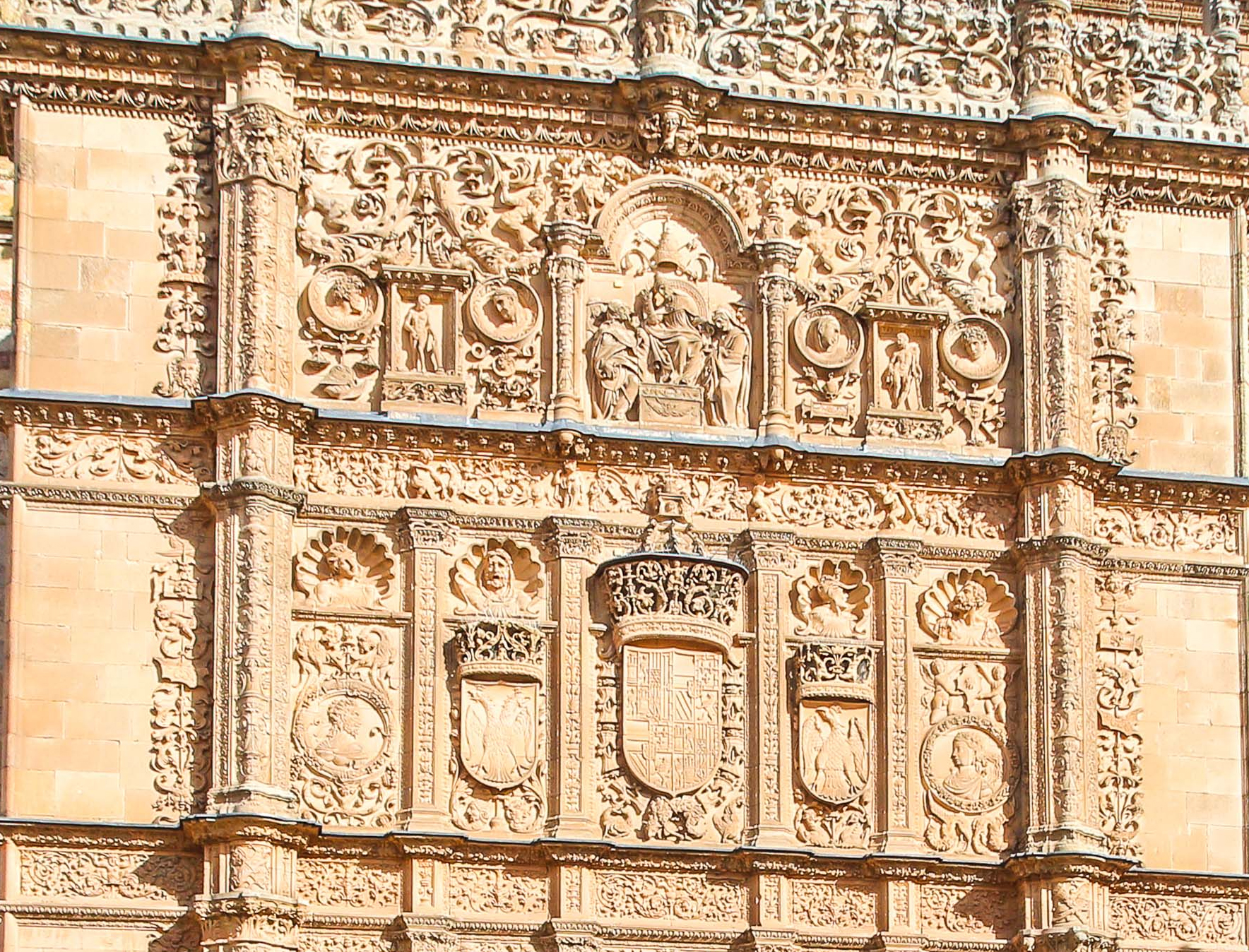
Disputationes Metaphysicae Francisco Suárez (5 January 1548–1617 September 25) became one of the most prominent figures in the Jesuit order and a leading philosopher and theologian of the late Scholastic period. He joined the Society of Jesus in 1564 and received his education in Salamanca, where he was deeply influenced by the Scholastic tradition, particularly […]

2024 Spring: Metaphysics – Discovery of Ens inquantum Ens
“Do we in our time have an answer to the question of what we really mean by the world ‘being’? Not at all. So it is fitting that we should raise anew the question of the meaning of Being.” With these words, published in 1927, Martin Heidegger reignited a question—tamped down by modern thought for […]
Tradition and Technology
Our extended senses, tools, technologies, through the ages, have been closed systems incapable of interplay or collective awareness. Now, in the electric age, the very instantaneous nature of co-existence among our technological instruments has created a crisis quite new in human history. Our extended faculties and senses now constitute a single field of experience which […]
