

Lecture: Jefferson, Natural Rights, and the Sources of the Declaration of Independence
In this Lyceum Institute Colloquium, John Pinheiro (Acton Institute) examines Thomas Jefferson’s understanding of natural rights and argues that the Declaration of Independence is best understood within the organic English constitutional tradition of common law, rather than primarily through a Lockean framework. The lecture explores the relationship between natural rights language and inherited English liberties, […]

Lecutre: Self-Sufficiency of Happiness in the Nicomachean Ethics
In 2024, the Lyceum Institute this thoughtful interpretation of a perennial difficulty in interpreting Aristotle’s Nicomachean Ethics, presented by Joseph M. Cherny, PhD Candidate at the Center for Thomistic Studies at the University of St. Thomas in Houston, TX. Mr. Cherny asks: how is happiness self-sufficient? Does it find fulfillment in one good, or a […]

Lecture: The Analogous Use of Words
Last year, the Lyceum Instituted hosted Dr. Domenic D’Ettore (Dean, Division of Liberal Studies and professor of Philosophy with the Center for Thomistic Studies at the University of St. Thomas, TX), a careful and insight scholar of the Latin Thomist tradition and an expert on analogy. Drawing on his great expertise, Dr. D’Ettore presents for […]

Lecture: You Are Not Your Own: a phenomenological investigation of embodiment
Last year, the Lyceum Institute again hosted Dr. Steven DeLay (Research Fellow, Global Centre for Advanced Studies, Dublin and Tutorial Fellow, Ambrose College, Woolf University) in presenting his research. A prolific author and expert in French phenomenology, we are delighted to have Dr. DeLay contributing to our colloquia for the second year in a row. […]

Lecture: The Centrality of Noble Goods for Human Flourishing
Last year, the Lyceum Institute hosted Dr. Daniel De Haan (Frederick Copleston Senior Research Fellow & Lecturer in Philosophy & Theology in the Catholic Tradition Blackfriars and Campion Hall / Research Fellow, Ian Ramsey Centre for Science and Religion, Faculty of Theology and Religion, University of Oxford) for a colloquium presentation on “The Centrality of […]
Jefferson, Natural Rights, and the Sources of the Declaration of Independence
Presenting the fifth in our Colloquium series for the year 2024, Dr. John Pinheiro (PhD in History, Director of Research at the Acton Institute for the Study of Religion and Liberty), challenges the common narrative that reduces Thomas Jefferson’s thought in writing the Declaration to the philosophy of John Locke. Dr. Pinheiro was previously professor […]
Self-Sufficiency of Happiness in the Nicomachean Ethics
Our Colloquium series for the year 2024 continues with a thoughtful interpretation of a perennial difficulty in interpreting Aristotle’s Nicomachean Ethics, presented by Joseph M. Cherny, PhD Candidate at the Center for Thomistic Studies at the University of St. Thomas in Houston, TX. Mr. Cherny asks: how is happiness self-sufficient? Does it find fulfillment in […]
You Are Not Your Own: a phenomenological investigation of embodiment
It is our pleasure to again host Dr. Steven DeLay (Research Fellow, Global Centre for Advanced Studies, Dublin and Tutorial Fellow, Ambrose College, Woolf University) in presenting his research. A prolific author and expert in French phenomenology, we are delighted to have Dr. DeLay contributing to our colloquia for the second year in a row. […]
The Centrality of Noble Goods for Human Flourishing
The Lyceum Institute is delighted to host Dr. Daniel De Haan (Frederick Copleston Senior Research Fellow & Lecturer in Philosophy & Theology in the Catholic Tradition Blackfriars and Campion Hall / Research Fellow, Ian Ramsey Centre for Science and Religion, Faculty of Theology and Religion, University of Oxford) for a colloquium presentation.
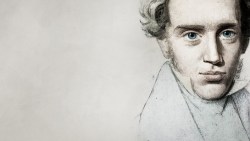
Hearing the Word of God
Hearing the Word of God: A Kierkegaardian Phenomenology of Conscience Dr. Steven DeLay “Husserl insisted that I should study Kierkegaard.” So recounts the Russian existential philosopher, Lev Shestov, in his posthumously published 1939 essay, “In Memory of a Great Philosopher: Edmund Husserl.” Why would Husserl have said such a thing? As soon as one begins […]
