

Columbanus Fellowship – 2024/25 Application
DEADLINE EXTENDED TO 11/29/2023 What makes a person to be educated? Institutions of higher learning in the United States of America, in recent decades, have answered this question with narrowed focus on specializations, often at the cost of both deep and comprehensive intellectual development. The Lyceum Institute offers a different path: one which strives both […]

Symbolism at the Nadir of Modernity
Our late-modern world, to borrow a phrase from Carl Trueman’s Rise and Triumph of the Modern Self, dwells in petty enchantments. That is, the rise of modernity, and especially industrial modernity, affected what Max Weber termed a disenchantment: we no longer saw vitality and power in nature and its operations but a mere mechanicism. The […]
Studiousness vs. Curiosity
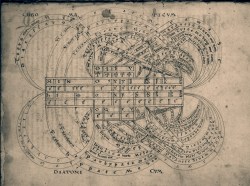
I begin this inquiry into the contrast of studiousness vs. curiosity by quoting from a perspicacious essay of the literary theorist Allen Tate, penned in 1945, titled, “The New Provincialism”. Tate writes: The provincial attitude is limited in time but not in space. When the regional man, in his ignorance, often an intensive and creative […]

Fall 2023: Eugen Rosenstock-Huessy
Rosenstock-Huessy’s is a powerful and original mind. What is most important in his work is the understanding of the relevance of traditional values to a civilization still undergoing revolutionary transformations; and this contribution will gain rather than lose significance in the future. “Rosenstock-Huessy, Who Is He?” Join us for an invigorating seminar that delves into […]

Fall 2023: Heidegger’s Phenomenological Method – Part I
Phenomenology, a term rich with various meanings through history, is now commonly recognized as a collection of intellectual pathways pioneered by Edmund Husserl in his seminal work, Logische Untersuchungen or Logical Investigations (1900, revised in 1913 to coincide with the more-developed Ideas Pertaining to a Pure Phenomenology and Phenomenological Philosophy). These philosophical explorations, all grounded […]

Fall 2023: Thomistic Psychology – Habits and Experience
In a world where habits often seem synonymous with unconscious and automatic reactions, it is time to revisit and explore the true depth and meaning of this vital aspect of human existence. The Lyceum Institute is pleased to present an 8-week intensive seminar on “Thomistic Psychology: Human Habits and Experience of the World.” Guided by […]

Is Beauty a Transcendental?
Perhaps you have heard of Bryan Johnson, the wealthy man spending millions of dollars per year on a routine designed to reverse his age. This routine requires absolute conformity: every day of his life is controlled by the program titled “Blueprint”, which comprises routine measurement and treatment of: heart, brain, lung, the gastrointestinal tract, his […]

Art of Rhetoric I: Discovery of Arguments
“…it is strange if it is a shameful thing not to be able to come to one’s own aid with one’s body but not a shameful thing to do so by means of argument, which is to a greater degree a human being’s own than is the use of the body.” Aristotle, Art of Rhetoric, […]
On the Purposes of Art
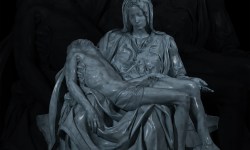
What is the purpose of art? It is not a new question. To the contrary, it resides among the oldest of questions. Some may despair of a meaningful answer, given the ancient age of a question yet still be asked—and, at times, asked as though nothing said in the millennia before us has given satisfaction. […]
What does it mean to know?
“I know.” “I don’t know.” We say these two sentences all the time. But do we know what they mean? Do we know what it means, “to know”? For many persons, content as they are not to ask meaningful questions, there seems no need of an answer. But for anyone who wishes to have confidence […]
