

Announcing: Trivium 2024
Education in the liberal arts has been neglected in modernity and, when not ignored, derided by the forces of ultramodern thought. The consequences of this dereliction are evident: even those who wish to know often know less than they would like and cannot express themselves as well as they ought. Fortunately, we can retrieve the […]
Announcing: Greek 2024
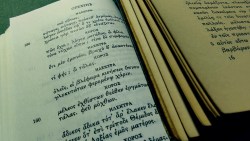
Aeschylus and Aristophanes, Plato and Aristotle, Xenophon and Thucydides: it is one thing to know their texts. It is another to read them in the language their authors used. The roots of Western culture sprung up in Ancient Greece. If we are to be successful cultivators of future growth ourselves, we ought to attend to […]

A Brief Life of St. Columban
“The missionary labours of the Irish were not confined to Great Britain, but extended far and wide through the west of Europe. In the sixth and seventh centuries, Irish monasteries were founded in Austrasia and Burgundy, Italy, Switzerland, Bavaria; they were established among Frisians, Saxons, Alemanni. And as centres of Latin education as well as […]

Art of Rhetoric I: Discovery of Arguments
“…it is strange if it is a shameful thing not to be able to come to one’s own aid with one’s body but not a shameful thing to do so by means of argument, which is to a greater degree a human being’s own than is the use of the body.” Aristotle, Art of Rhetoric, […]

On Architecture and Order
What is architecture? How can we define it? As a human art, it seems that we cannot conceive of what it is fully or properly without efficient and final causes: certainly it is by human beings, and somehow for human beings. But for human beings to do… what? What benefit does the architect render human […]

Falling in Love with an Easy Life
An excerpt from the concluding pages of Solzhenitsyn’s Gulag Archipelago, Part II, recollecting time spent in the Butyrki transit prison of central Moscow. In particular, he here notes a contrast with the prisoners of his own generation—most of whom fought in the Second World War with some pride in their service for the Motherland—and the […]
John Deely on the “Practical Value” of Logic
Peirce rightly speaks of the practice of boasting of the utility of this or that science as a “nauseating custom” (1898a, alt. ver. : CP 1.667). This is because the practice in question almost invariably is indulged in for purposes quite unrelated to the true character of the science in question or to the advance […]

Trivium: The Art of Logic 2023
On 1 May 2023, we will begin our second Trivium course of the year: The Art of Logic. Our first discussion session will take place on 8 May 2023 at 6:00pm ET. This course is open to all enrolled Lyceum Institute members; having taken Grammar is not a prerequisite. If you would like to sign-up and take […]
What is Music?
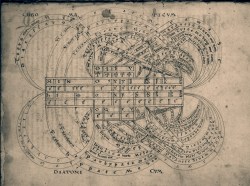
Few, if any of us, go very long without hearing music. We have available to us more hours of streaming than ever we could hear in several lifetimes. It sits available through every device; it attends nearly every commercial, every television show. The quality of a movie may be greatly enhanced, or perhaps even ruined, […]

Catherine Project – Summer 2023 Registration
Notice that our friends at the Catherine Project have opened registration for their Summer 2023 program! They have over 30 reading groups, 4 tutorials in Greek, Introductory Latin, and Introductory Classical Syriac. If you are serious about engaging in any of these groups, see their Registration Form here (including a catalog of available courses).
