

On Knowing Ourselves
A Philosophical Happy Hour questioning how and how well we come to know ourselves. Who are we, really? Commonly we presume today that we know ourselves by a turn inward. We associate self-knowledge with “introspection” and “authenticity”. But despite this contemporary insistence, it seems many people do not know themselves: conflicted in motivation and desire, […]
On Silence, Sophistry, and the Preservation of Wisdom
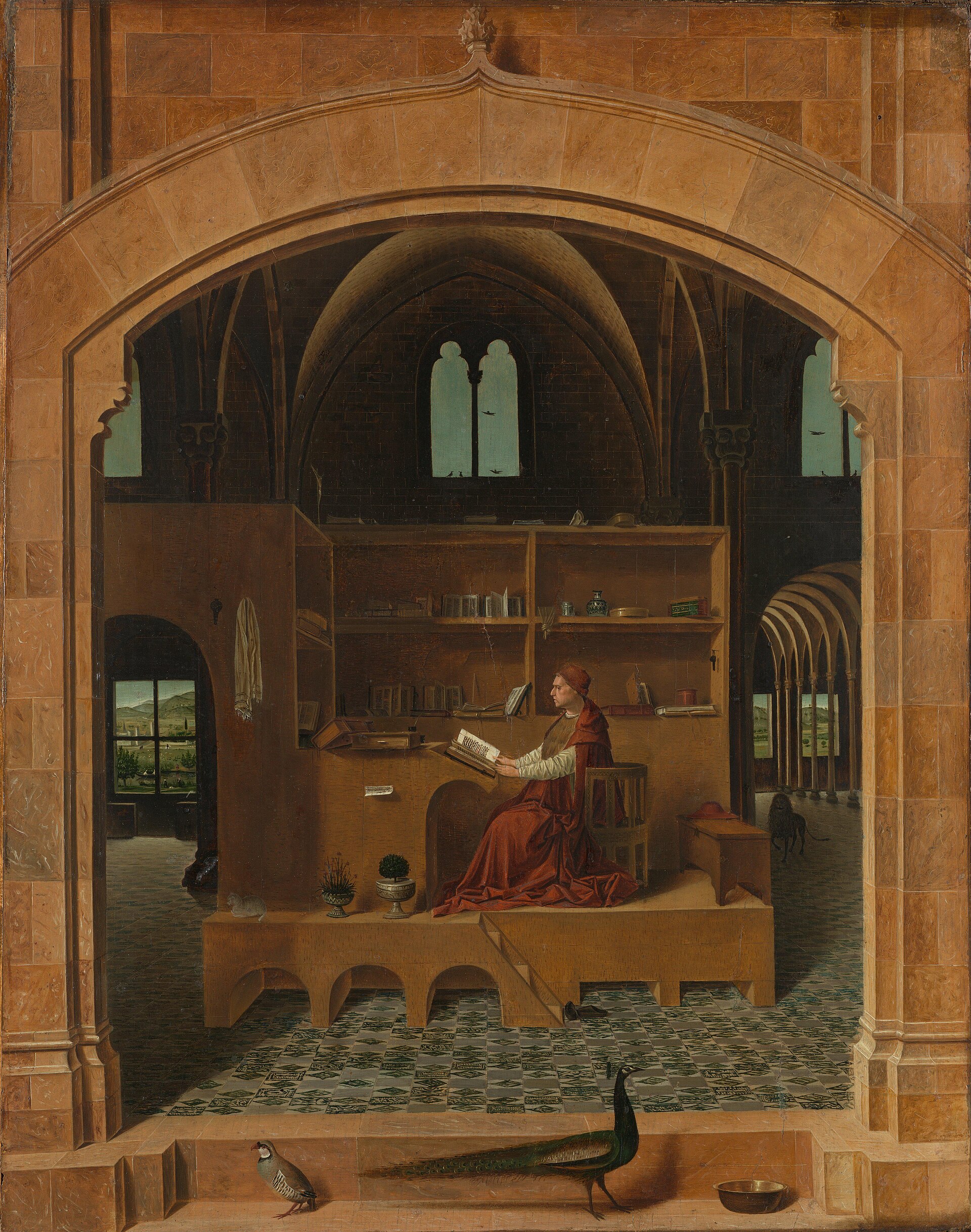
Why we need digital monasteries for the layman, and what that means. The Roman Empire was inarguably among the greatest imperial powers ever to have existed. It spanned the breadth of all Europe, crossed into Britain, swept south along the Mediterranean, and held much of the world in order for hundreds of years. But over […]

Lecture: Jefferson, Natural Rights, and the Sources of the Declaration of Independence
In this Lyceum Institute Colloquium, John Pinheiro (Acton Institute) examines Thomas Jefferson’s understanding of natural rights and argues that the Declaration of Independence is best understood within the organic English constitutional tradition of common law, rather than primarily through a Lockean framework. The lecture explores the relationship between natural rights language and inherited English liberties, […]

On the Good of Cheap Entertainment
A Philosophical Happy Hour questioning whether we do ourselves or our communities harm or benefit through cheap entertainment: movies, television, books, games, and more. Popular entertainment is often dismissed as shallow, disposable, or even harmful. Yet much of what people actually read, watch, and enjoy falls squarely into this category. This week’s Philosophical Happy Hour […]
On Academic Gatekeeping
A Philosophical Happy Hour on admission to and exclusion from the halls of learning—or, the needs and excesses of academic gatekeeping. “Shut your College gates against the votary of knowledge, throw him back upon the searchings and the efforts of his own mind; he will gain by being spared an entrance into your Babel.” – […]

Engagement Survey (Prize Giveaway)
Public Engagement Survey Now Open The Lyceum Institute exists to serve a public good: serious liberal education conducted online, grounded in tradition, and ordered toward intellectual and moral formation. As our programs, seminars, and community continue to grow, it is important that we pause to listen—not only to members, but to the wider public we […]

The Growth of Consciousness
A Philosophical Happy Hour on the nature, growth, and importance of understanding consciousness. The concept of “consciousness” today seems rather important: it is brought up in questions about artificial intelligence, neuroscience, the development of habits, “mindfulness”, self-improvement, and countless other related issues. But what is consciousness? Few good definitions seem available. Even many persons professionally […]

Do We Still Need Universities?
A Philosophical Happy Hour on the ends and purposes of higher education, universities, and the needs of teaching and learning. —Reading Francis Slade’s “Ends and Purposes” In the nearly two-years since Claudine Gay’s revealed plagiarism and subsequent resignation from Harvard University, familiar questions concerning the function and legitimacy of academic work—questions that, despite their familiarity […]
On the Shifting Sands of Language
A Philosophical Happy Hour on Owen Barfield’s “Philology and the Incarnation”, wherein we will think about meaning and metaphor in language. For this week’s Philosophical Happy Hour, we will again take up a specific short text to read and discuss: this time, Owen Barfield’s short article, “Philology and the Incarnation”, available in this attached PDF. […]

Trivium: Grammar I – Foundations [Winter 2026]
Announcement of our Winter 2026 Trivium: Art of Grammar course, in which we investigate the foundations of the English language (and language generally) through a rigorous study of syntax and semantics. Description Details This course includes eight weekly readings, lectures, homework assignments and two live class sessions per week. The class sessions are recorded but […]
