
A Philosophical Happy Hour on distinctions, the doctrine of their kinds, and the importance making them correctly.
The failure to make good distinctions characterizes the stupidity of our age. Observe the social networks and see how few distinctions are proposed, how unquestioning the categories, how obstinate every adherent to his or her ideology! How many relationships are ruined or concepts muddled because someone refuses to make—or acknowledge—a distinction?
The art of making distinctions may seem burdensome, to those unpracticed in it. But, although one may proliferate distinctions that make no difference ad infinitum, one also cannot see clearly what is without understanding the differences of beings and our experience of them. To do so, we must learn to make appropriate distinction—and reunification—a habit of thinking.
The Nature of Distinctions
If clear understanding depends upon seeing what a thing is, it depends no less upon he ability to see what it is not. To distinguish is not to divide arbitrarily, nor to impose separation where none exists, but to recognize the limits constitutive of order.
What exactly is a distinction? It is not identical with difference, though intimately related to it. But how? What distinguishes “distinction” from “difference”? Is it something in things themselves? In the way that each is made? Something of the object (or process of “objectivization”)? We ought, moreover, to ask about the presuppositions to making a distinction—that is, from what kind of objects may we make distinctions, for what purposes, with what knowledge, and so on.
Must it be the case, for instance, that for any two things to be distinguished, they must first be identified as somehow the same? What does it mean to be the “same”? “Other”?
Doctrine(s) of Distinctions
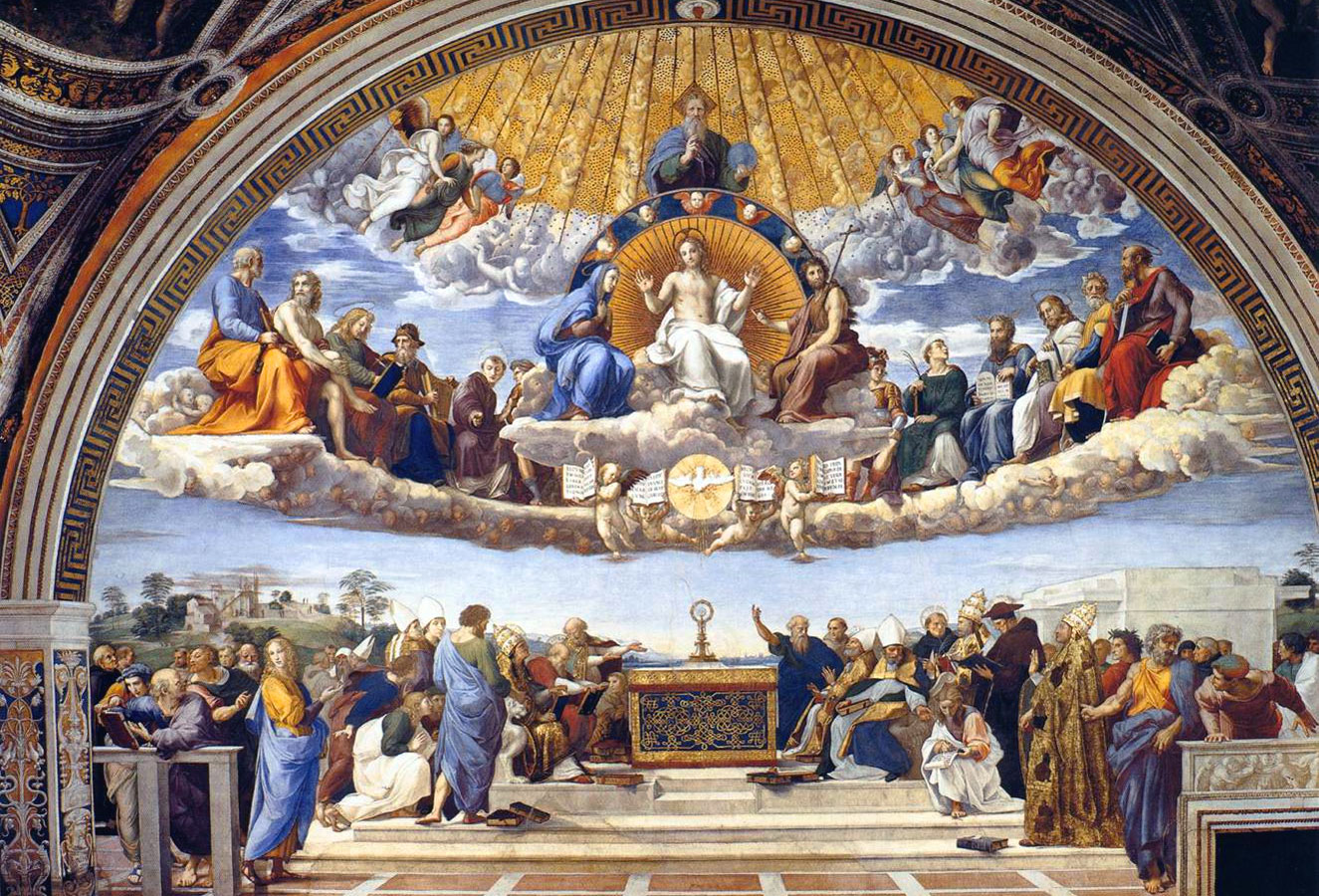
As is common to many issues in Scholasticism, rivalry between the Dominican and Franciscan orders—and in particular, between students of St. Thomas Aquinas (1225–1274) and Bl. John Duns Scotus (1266–1308)—drove much of the development in the doctrine of distinctions. St. Thomas, in numerous places throughout his corpus, discusses distinctiones realis et rationis—distinctions of the real and of reason. A few years after Thomas’ death, the secular priest known as the “Solemn Doctor” (and opponent of Aristotelianism), Henry of Ghent (c.1217–1293) introduced a “middle” distinction, which he called the “intentional” (ultimately subdividing them into six different kinds). Similarly, Duns Scotus—himself often opposing Ghent—posits a “formal” distinction between the real and the rational, which seems to possess five different degrees of identity between the distinguished terms.
Subsequently, many other thinkers posited one or another system of distinctions—culminating, it seems, in that produced by the Jesuit philosopher and theologian Francisco Suárez (1548–1617), who maintains the Thomistic distinction between the real and the rational, but subdivides these into the following schema:
Suarezian Taxonomy
- Distinctions of reason
- Reason reasoning (proper)
- Intrinsically (most properly) – e.g., Peter and himself
- Extrinsically – of two second intentions – e.g., “animal” et “living”
- Reason reasoned (improper) – from the nature of the thing – e.g., existence and essence
- Reason reasoning (proper)
- Distinctions of the real
- Modal (improper) – from the nature of the thing – e.g., matter and quantity
- Between two things (proper)
- One which includes the other that adds something real to it
- Intrinsic – e.g., Peter and his matter
- Extrinsic – e.g., risibility from the human
- In everyway distinct (most proper) – e.g., Peter and John
- One which includes the other that adds something real to it
Peircean Taxonomy
In his efforts at making some retrieval of Scholastic and particularly Scotistic thought, Charles Sanders Peirce (1839–1914) adopted a threefold set of distinctions: first, the dissociative (objects distinguishable because they are in every way separable from one another, such as “blue” and “green”). Second, the prescindable or abstractable (objects of which one can be separated from the other, but not vice versa, such as “red” and “color”). And third the discriminable (or things in no way actually separable from one another except in thought, as “me” and “myself”). Whatever objects can be dissociated from one another can also be both prescinded and discriminated, and whatever can be prescinded can be discriminated—but the inverse is not true. In other words, objects which can be discriminated cannot necessarily be prescinded, and objects priscindable cannot necessarily be dissociated.
Making Distinctions (with us)
To answer any question of importance—politics, ethics, metaphysics, logic, theology—requires that we make distinctions. If philosophy, the true exercise of reason in pursuit of wisdom, is born in wonder it matures through learning the art of distinction. This art has been blurred in our world of noise.
You should really (and not just in reason!) join our conversation this Wednesday (12 November 2025, from 5:45-7:15+ pm ET) if you want to assist in the making of good distinctions.
philosophical happy hour
« »
Come join us for drinks (adult or otherwise) and a meaningful conversation. Open to the public! Held every Wednesday from 5:45–7:15pm ET.

No responses yet