
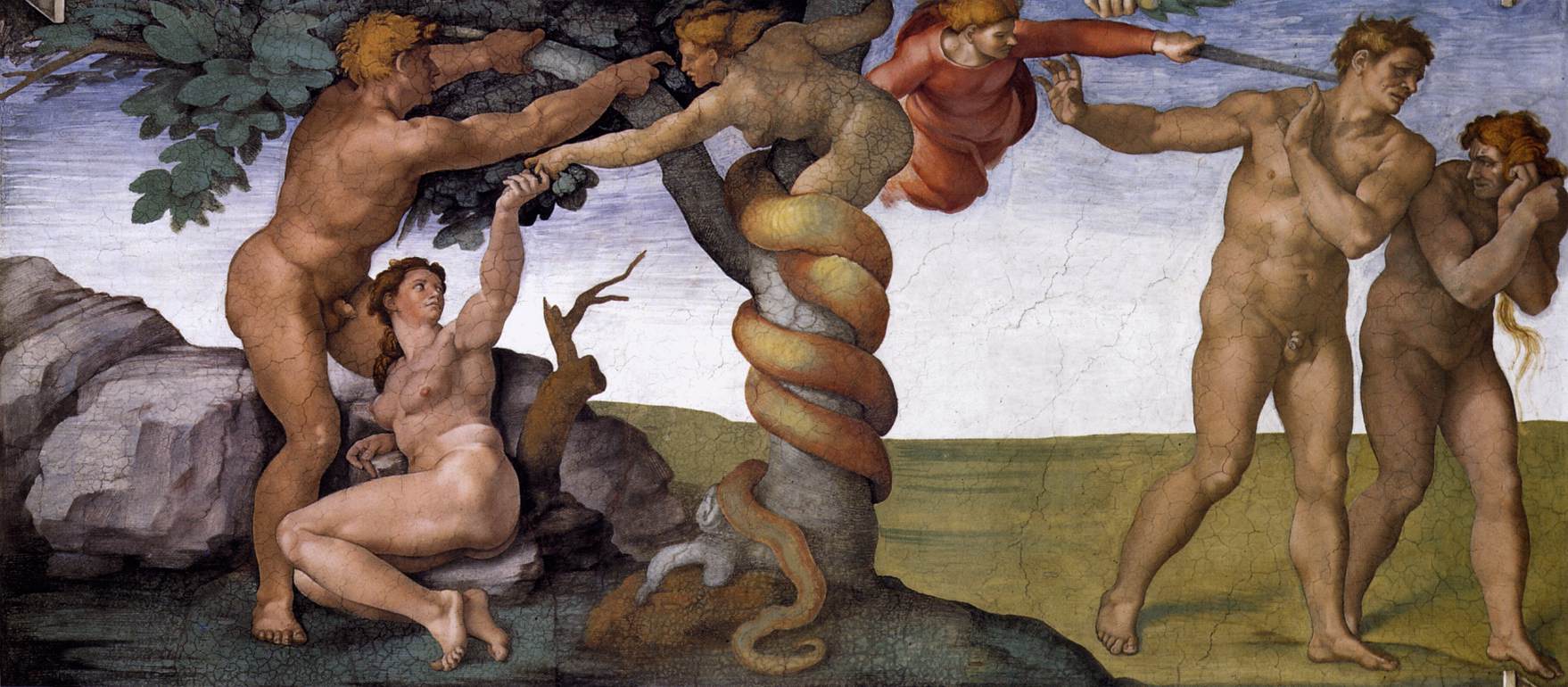
A Philosophical Happy Hour on admission to and exclusion from the halls of learning—or, the needs and excesses of academic gatekeeping.
“Shut your College gates against the votary of knowledge, throw him back upon the searchings and the efforts of his own mind; he will gain by being spared an entrance into your Babel.” – John Henry Newman, The Idea of a University.
Not a one of us exists without desiring knowledge. We all, that is, stretch ourselves out towards knowing. How and why we pursue this common end, however, is quite diverse. Some seek only the very-thin knowledge that satisfies curiosity: the busybody, the snoop, the voyeur, the endless-scroller, the Wikipedia-traveler, the YouTube-recommendation-algorithm-follower, and so on. Others seek the knowledge to inform praxis, that which needs to be known for doing. Others still seek knowledge for its own sake.
Some knowledge is easily attained. Some knowledge eludes even our most arduous pursuits. Where do we go to find it? For many, for decades if not centuries, the university—or, more broadly, the academy—has been the keeper and the supplier of knowledge. Today, however, it seems to have become a guardian less of knowledge and more of credentials and resources. This, it seems, is a perversion.
Academic Institutions
For as long as humans have created institutions, they have set up barriers. Sometimes these are literal walls; but more profoundly they are distinctions of the persons included, by which they are set off against those kept outside. The basis of exclusion may be rooted in ethnic, religious, or class distinctions: Catholics and Italians need not apply, for instance—or today more generally, white men.


Until recently, similar statements were found in most US-based institutions’ hiring posts, until mandated otherwise by an Executive Order on 21 January 2025. Their removal from postings, however, assuredly does not entail a removal from the minds of those making hiring decisions. While this prohibition pertains to faculty, it seemingly indicates an ideological ordination of the institutions. Students may not be forced into as rigid a conformity—but could we reasonably expect they would not face similar pressures?
Most readers of this site would likely see this as a problem. Some may not. But there are other kinds of “gates” to the academy, are there not? Standards, rigorously-established curricula, and boundaries of discipline and performance will, of necessity, exclude many—not because those persons are judged undesirable in their own beliefs but because such are the conditions under which intellectual habits are formed. Many may not be able to master Latin or Greek; many may struggle to perceive a modus tollens argument couched in subtle rhetoric. And few indeed will grasp the dialectical revelations made through the middle books of Aristotle’s Metaphysics.
Should they, nevertheless, be allowed to try?
Keeping the Canon
At the same time, there is the other question: what is to be studied in any institution of higher education? What is to be explicitly included, and what to be deliberately excluded? What of texts or ideas or works that fall into neither category? The world has been shaped by some thinkers and not others. Does that, of necessity, mean that those thinkers are in fact more important than those who have been ignored? Have they been ignored for the same reasons, perhaps, that would today keep white men from jobs in some universities?
Take a brief Lyceum Institute survey and be entered to win a $50+ prize!
What motivates the boundaries of our intellectual pursuits? How do we decide what should form the mind and what should not?
Who Keeps the Gatekeepers?
Academic gatekeeping raises a tension between access to institutions and access to education itself. When intellectual demands are lowered to accommodate preferences or sociological pressures, the object of institutional education is transformed. Students may be fully included administratively and socially while being deprived of those rigorous disciplines, formative instruction, and aspirations toward intellectual excellence that come only from the incidentally-exclusionary strictures mentioned above. The central question becomes whether universities are admitting more people into learning—or quietly redefining learning so that fewer demands are made of anyone.
This Wednesday (14 January 2026, from 5:45-7:15+ pm ET) we invite you—all of you! no exclusions! (unless you behave badly, at which point you will be forcefully thrown out of the gates)—to join our Philosophical Happy Hour as we take up these and related questions:
- To what extent are academic standards and curricular requirements genuinely formative, and how can we distinguish such formation from exclusion masquerading as rigor?
- Does the rejection of inherited intellectual traditions in the name of openness expand inquiry, or does it merely replace older gates with less visible ones?
- Is widening access to higher education compatible with preserving demanding forms of intellectual excellence, or does one inevitably come at the expense of the other?
philosophical happy hour
« »
Come join us for drinks (adult or otherwise) and a meaningful conversation. Open to the public! Held every Wednesday from 5:45–7:15pm ET.

No responses yet