
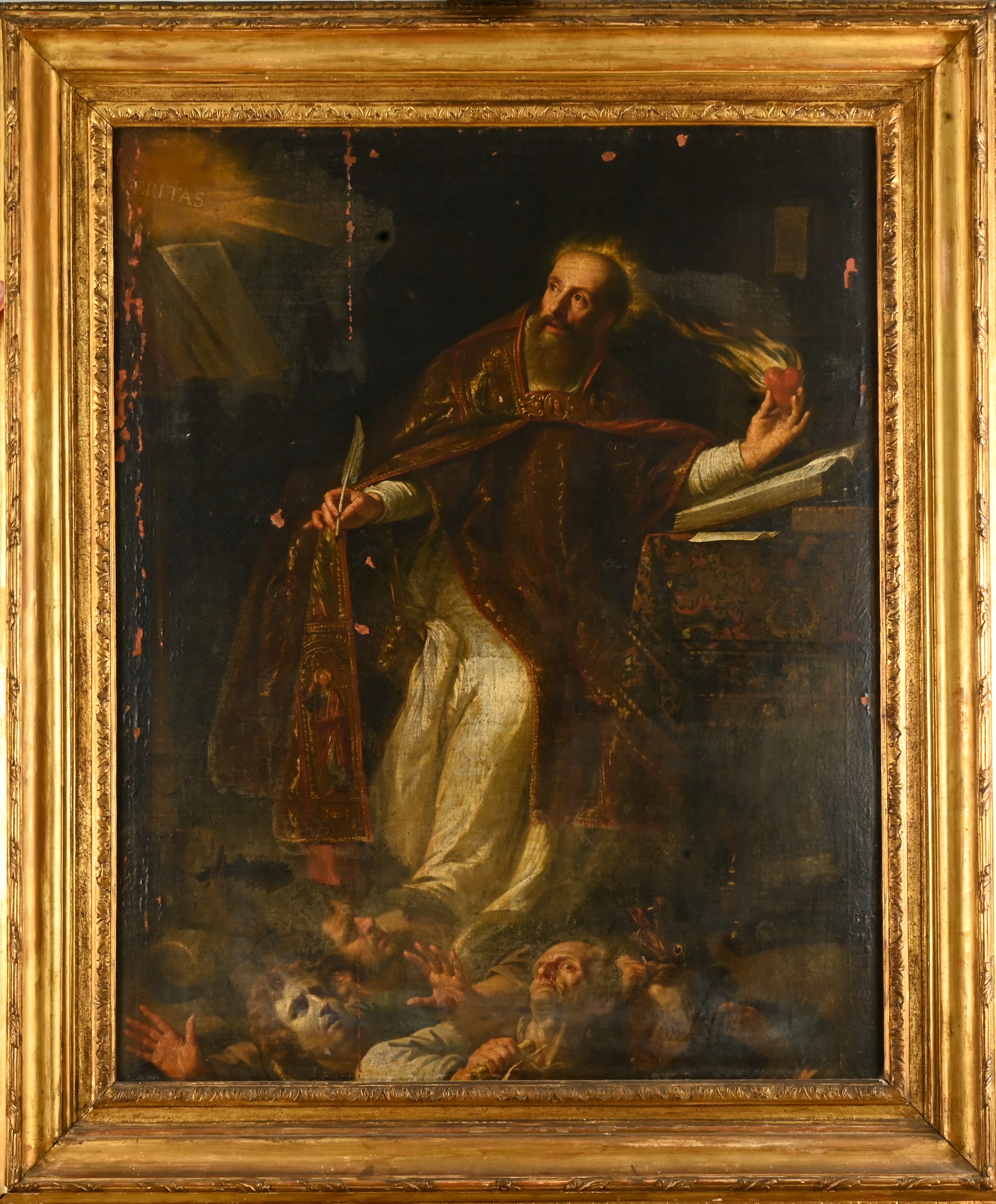
A Philosophical Happy Hour on the act of will, and the question: what does it mean to say that our will is free? What makes a will good?
A common staple of western philosophical anthropology is arguing or asserting there is such a thing as a human will, a driving force or the part of ourselves that desires something. Even those who might object that we have a free will concede that we nevertheless want things. As Augustine points out in his charming dialogue piece De libero arbitrio voluntatis (On Free Choice of the Will):
Augustine: So, tell me this: Do we have a will?
Evodius: I don’t know.
Augustine: Do you want to know?
Evodius: I don’t know that either.
Augustine: Then don’t ask me any more questions.
Evodius: Why not?
Augustine: First, because there’s no reason for me to answer your questions unless you want to know the answer. Second, because I should not discuss these sorts of things with you unless you want to attain wisdom. And finally, because you can’t be my friend unless you want things to go well for me. But surely you have already seen whether you will your own happiness.
“De libero arbitrio voluntatis.” In On Free Choice of the Will, Edited by Thomas Williams, 1993.
This desire, whether it be for the sake of relationships, social status, justice, or ultimately our human happiness cannot be coherently denied. But what precisely makes a will free has been a historic controversy since at least Augustine. Do we have a will that is free? Is there such a capacity for choice apart from intellectual deliberations? Are we constrained by impulse the same way that non-rational animals are? Differing accounts of what degree of freedom is afforded to the will (which typically follows from some preexistent understanding of freedom) range in ancient philosophy, scholasticism, early modern philosophy/Kantianism, and in 20th century existentialism.
A Good Will Hunted
Furthermore, if we are free, what ethical considerations follow from this reality? Does freedom consist in an active force for self-determination, as an existentialist like Sartre would have it? Can we speak of the will’s drive for both personal human happiness and holistic communal justice like Anselm of Canterbury or Duns Scotus would? Is a disordered will (i.e., wanting the wrong things) the ultimate source of moral failings? And if we do have free will, to what degree does it differ from our capacity to concretely reason and think about our circumstances, practically determining what we ought to do? Can someone fail to be prudent for instance but ultimately love the right things in the end? Returning to Augustine, he writes that a person is freer in their will when their desire is ordered to what ought to be done or what ought to be loved etc.
To have a good will is to have something far more valuable than all earthly kingdoms and pleasures; to lack it is to lack something that only the will itself can give, something that is better than all the goods that are not in our power. Some people consider themselves utterly miserable if they do not achieve a splendid reputation, great wealth, and various goods of the body. But don’t you consider them utterly miserable, even if they have all these things, when they cleave to things that they can quite easily lose, things that they do not have simply in virtue of willing them, while they lack a good will, which is incomparably better than those things and yet, even though it is such a great good, can be theirs if only they will to have it?
Ibid.
You May Take Our Lives, but You Will Never Take Our… Will?
For this week’s happy hour, we’ll discuss and look at several questions on the will and freedom. Join us this Wednesday (11 March 2026, from 5:45-7:15+ pm ET)—if you so will—to engage in a lively conversation about choice, freedom, determinism, and the goodness (and wrongness) of our self-determinations. Questions to consider:
- First, what is “freedom” and how does it relate to the human will?
- What relationship does the will have to practical day-to-day concerns?
- If we have a will, towards what does it naturally incline itself, if anything? Why do “natural inclinations” matter for particular choices?
- How does the will relate to ethical considerations and questions?
- What else, if anything, jumps out at you from reading (however much you can!) of St. Augustine’s On Free Choice of the Will?
philosophical happy hour
« »
Come join us for drinks (adult or otherwise) and a meaningful conversation. Open to the public! Held every Wednesday from 5:45–7:15pm ET.

No responses yet