
A Philosophical Happy Hour on the relationship between self-awareness, morality, and machine technologies
What is the relationship between self-awareness and our moral convictions? How do our technologies affect this relationship? This week’s Philosophical Happy Hour takes up these questions and more. But let us set the stage for our conversation.
A member brought this article to our attention. In sum, it states that individuals with lower self-awareness exhibit stronger brain responses to moralized political issues, leading to faster, more rigid decisions and potentially contributing to political polarization—or perhaps to an ideological close-mindedness. In this context, “self-awareness” is understood as one’s ability to assess his or her own decision-making process.
But this raises the question—so often neglected in psychological research—as to whether this operationalized definition is sufficient. Further, the accelerating speed of our information processing technologies may affect our neurological attunement. What then, happens to this sense of “self-awareness”?
Self-Awareness and Moral Conviction
What is self-awareness? What, for that matter, does it mean to be “aware”? The article linked above claims that strong convictions or deeply-held beliefs correlate with a diminished degree of self-awareness; that the speed of response based on those convictions shows the person to be lacking capacities or habits of reflection.
While reflection is important, of course, does this mean that those holding strong convictions are not reflective? Perhaps we need a better definition of self-awareness. Perhaps we need a better sense of what it means “to be aware”. To what degree is it tied to self-control? And what does it mean to be self-controlled?
Machine Technologies and Awareness
Headspace, Calm, Reflectly, Youper, Grow, Woebot, Wysa, Waking Up: these are apps and services that promise improved mental clarity and awareness. Some—such as Youper, Woebot, and Wysa—directly integrate “AI” / LLM technologies into therapeutic modalities. While some ask whether these technologies might result in entities having awareness themselves (a question that requires a deeper understanding of awareness itself), the more interesting issue is how they might affect our awareness of ourselves.
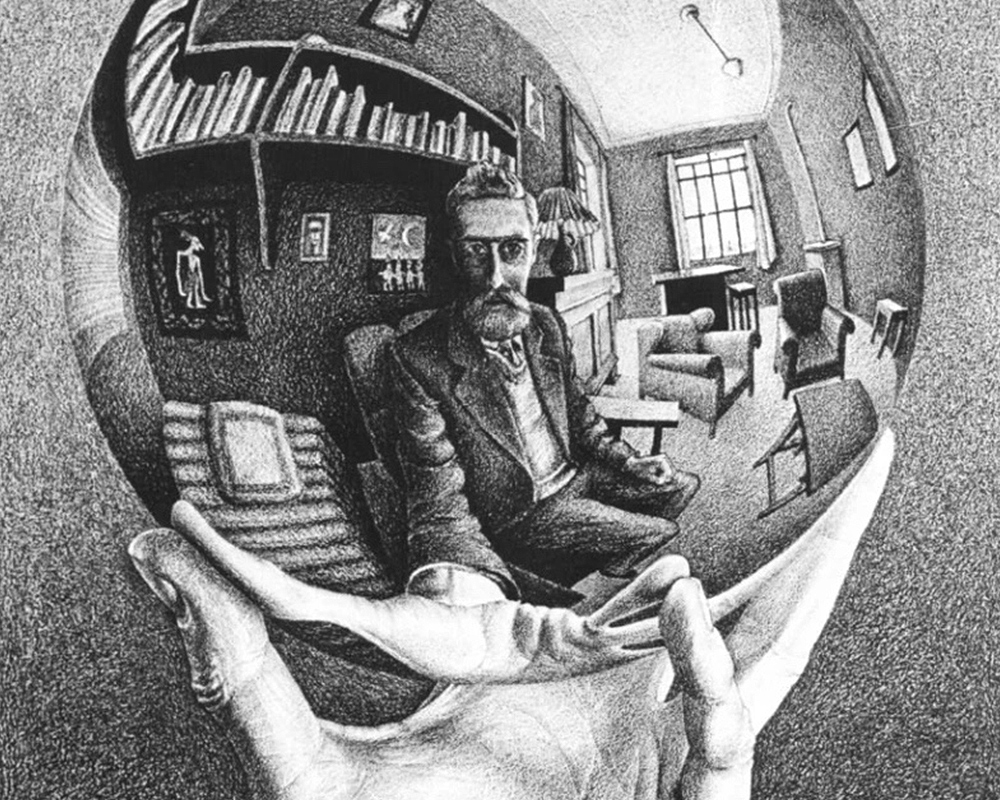
What are the consequences of creating technologies that attempt to mirror our own processes of thought? Do they show us something new—or a distorted reflection? Will they alter how we hold our beliefs? Will they help or harm our pursuit of “self-control”?
Intelligence Beyond the Machines
Join us this Wednesday (2 July 2025 from 5:45–7:15+ PM ET) to have a conversation that machines never could—and to learn a little bit about what it means to be human, to hold beliefs, to make moral judgments, and to know ourselves.
philosophical happy hour
« »
Come join us for drinks (adult or otherwise) and a meaningful conversation. Open to the public! Held every Wednesday from 5:45–7:15pm ET.

No responses yet